Wrongful Death in Construction: Securing Financial Protection for Your Family
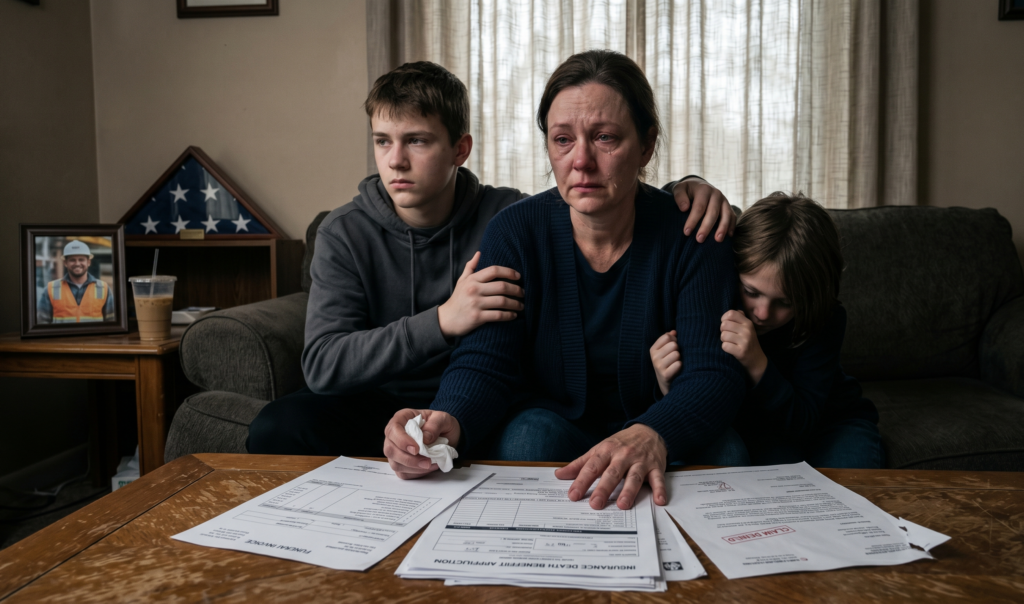
When a construction worker does not come home, the family is left carrying two crushing weights at once: an unbearable loss and a sudden, frightening question about how the household will survive financially. In the days that follow, an insurance adjuster may reach out sounding kind and helpful. What many grieving families do not realize is that the system already has a number in mind — and it is rarely the number that reflects what was truly taken from them.
Construction remains one of the deadliest industries in the United States, and the benefits available to surviving families are often far broader than the first offer suggests. Understanding how those protections work — before signing anything — can be the difference between a family that is stabilized and one that is quietly shortchanged during its most vulnerable moment.
Two Separate Paths to Financial Protection
After a fatal jobsite accident, survivors are generally looking at two distinct sources of recovery, and they are frequently confused for one another. Each works differently, covers different losses, and runs on its own deadline.
- Workers’ compensation death benefits. These are no-fault benefits paid through the employer’s insurance. The family generally does not have to prove anyone did anything wrong — only that the death was work-related.
- A wrongful death claim against a third party. This is a separate lawsuit based on fault, brought against a company that is not the employer whose negligence contributed to the death.
The distinction that protects families: Workers’ comp death benefits are usually faster but limited and formula-based. A wrongful death claim is harder to prove but can pursue the full human and financial loss — losses comp was never designed to address. In many fatal construction cases, both may exist at the same time.
Who Generally Qualifies as a Dependent
Workers’ comp death benefits do not go to everyone equally. They flow to those the law recognizes as dependents, and this is one of the most state-specific areas of all. Standard guidelines suggest that the following are commonly considered:
- A surviving spouse, who is frequently presumed to be a dependent.
- Minor children, who are typically covered until a defined age, sometimes longer if they remain in school.
- Children with disabilities, who may qualify for extended or lifetime support in certain states.
- Other partial dependents, such as a parent or relative who relied on the worker’s income, in some jurisdictions.
How these dependents share the benefits, and for how long, changes dramatically from one state to the next. Attorneys often note that disputes over who qualifies and in what share are among the most common reasons death claims stall.
What Workers’ Comp Death Benefits Typically Include
While the exact formulas vary, death benefits generally fall into a few recognizable categories. The table below shows how they tend to compare against what a fault-based wrongful death claim may pursue.
| What’s Covered | Workers’ Comp Death Benefit | Wrongful Death Claim |
|---|---|---|
| Funeral and burial costs | Yes, up to a capped amount | Yes, often in full |
| Lost household income | A percentage of average wages | Potentially full lost earnings |
| Loss of companionship and guidance | Generally not available | Often recoverable |
| The family’s grief and suffering | Not covered | May be recoverable |
| Fault required | No — benefits are no-fault | Yes — negligence must be shown |
This contrast is why families are so often surprised. A comp death benefit may keep the lights on, but it generally places no value on the role the person actually played in the family — the partner, the parent, the provider. A wrongful death claim is the path designed to address that fuller loss.

How a Wrongful Death Claim Is Built
A wrongful death lawsuit rarely succeeds on grief alone. It is generally built on whether a recognized safety standard was broken by a party other than the employer. Construction is heavily regulated precisely because its accidents are so often fatal, and those federal rules create a clear baseline for what responsible companies are expected to do.
When a fall protection system was missing, a trench was left unshored, or a piece of equipment lacked a required guard, that violation can become powerful evidence of negligence. Families can review the federal safety standards that responsible contractors are expected to follow directly through the U.S. Occupational Safety and Health Administration (OSHA), the agency that investigates fatal construction incidents and publishes the rules behind them.
Insurer tactic to watch for: After a fatality, the companies involved sometimes move quickly to repair the scene, replace equipment, or gather “friendly” witness statements before the family has any guidance. Once that evidence is altered, proving what failed becomes far harder. Attorneys often emphasize how decisive the earliest days after a death can be.
Deadlines That Can Quietly End a Family’s Claim
This is where strong claims silently die. A workers’ comp death claim and a wrongful death lawsuit run on completely different clocks. The deadline to report and file for comp death benefits may be short, while the statute of limitations to file a wrongful death lawsuit is generally measured in years — but missing either is usually permanent.
State laws vary significantly. Filing deadlines, who counts as a dependent, the size of funeral and benefit caps, and even who has the legal right to bring a wrongful death claim change dramatically from one state to the next. Standard guidelines suggest confirming the specific deadlines that apply where the death occurred, because a missed window generally cannot be reopened — no matter how strong the underlying case was.
For a broader walkthrough of how a serious construction claim moves from the first report through a full resolution, our complete workers’ compensation guide explains each stage in plain language.
Approaches Surviving Families Commonly Consider
While nothing here is legal advice, the following reflects how fatal construction cases are generally navigated. Attorneys often recommend treating documentation and timing as the foundation of both claims:
- Identifying every company on site. Because responsibility is frequently shared, knowing which firms were present helps reveal whether a wrongful death claim against a third party exists at all.
- Preserving the scene and equipment. Photographs and records of the conditions, before anything is repaired, are often the most valuable evidence a family has.
- Being cautious with early offers. A quick settlement offered before the family understands the full picture is generally worth careful review, since accepting it can close the door on other claims.
- Acting within the deadlines. Because the clocks differ and state rules vary, understanding local time limits early is widely regarded as essential.
Remember: A fatal construction accident can open two doors, not one. Workers’ comp death benefits handle immediate, no-fault support, while a wrongful death claim may address the far larger loss the family actually suffered. State laws vary significantly, and the specific facts of the jobsite always matter.
Understand What Your Family May Be Entitled To
In the middle of grief, no family should have to guess whether they are being treated fairly — or accept the first number an insurer puts in front of them. Before assuming a single check is the end of the story, it helps to get a clearer picture of the potential value and direction of your family’s situation. Try the free, anonymous Benefits Estimator at HardHat Rights — no names, no pressure, just a clearer sense of your options in minutes. Start your free, anonymous Benefits Estimator here and find out what your next step could look like.
Disclaimer: This website is for informational purposes only and does not constitute legal or medical advice. The content provided is not intended to be a substitute for professional medical advice, diagnosis, or treatment. Benefit estimates are approximations based on standard state formulas and do not account for your state’s specific caps or your individual circumstances. Always consult a licensed workers’ compensation attorney in your state for legal advice, and a qualified health provider regarding any medical conditions or treatment.