The Nurse Case Manager: Helping You Heal, or Spying for the Insurance Company?
At some point in a serious workers’ compensation claim, a friendly voice may call and introduce herself as your nurse case manager. She sounds caring. She asks how you are feeling, offers to help schedule appointments, and promises to make the whole process smoother. For an injured construction worker buried in paperwork and pain, that help can feel like a lifeline.
Here is what most workers are never told up front: in many claims, the nurse case manager is hired and paid by the insurance company, not by you and not by your doctor. That single fact does not make her a villain, but it changes everything about how the relationship should be understood.

What a Nurse Case Manager Actually Does
A nurse case manager (sometimes called a “medical case manager”) is typically a licensed nurse assigned to coordinate the medical side of a workers’ comp claim. On paper, the role exists to keep your recovery organized. In practice, the job usually blends two very different missions:
- Helping arrange and track your medical appointments and treatment.
- Reporting back to the insurer on your condition, your progress, and your projected return to work.
That second mission is the one that catches workers off guard. Every conversation, every appointment she attends, and every offhand comment can become information that flows back to the company deciding whether to pay or deny your benefits. Standard guidelines in many states allow this kind of coordination, which is exactly why it deserves attention rather than blind trust.
Insurer tactic to watch for: A nurse case manager often becomes most active right after your treating doctor recommends surgery, extended therapy, or extended time off work. Her reports can shape whether that treatment is approved, delayed, or quietly cut short.
The “Two Hats” Problem
The core tension is simple. The nurse wears two hats at once: a caregiver’s hat and a cost-control hat. To be fair, many case managers are skilled professionals who genuinely smooth out a chaotic process. The problem is structural, not personal. When the insurer signs the paycheck, the quiet incentive leans toward containing costs and shortening claims.
This is why the same helpful behaviors can work against an injured worker:
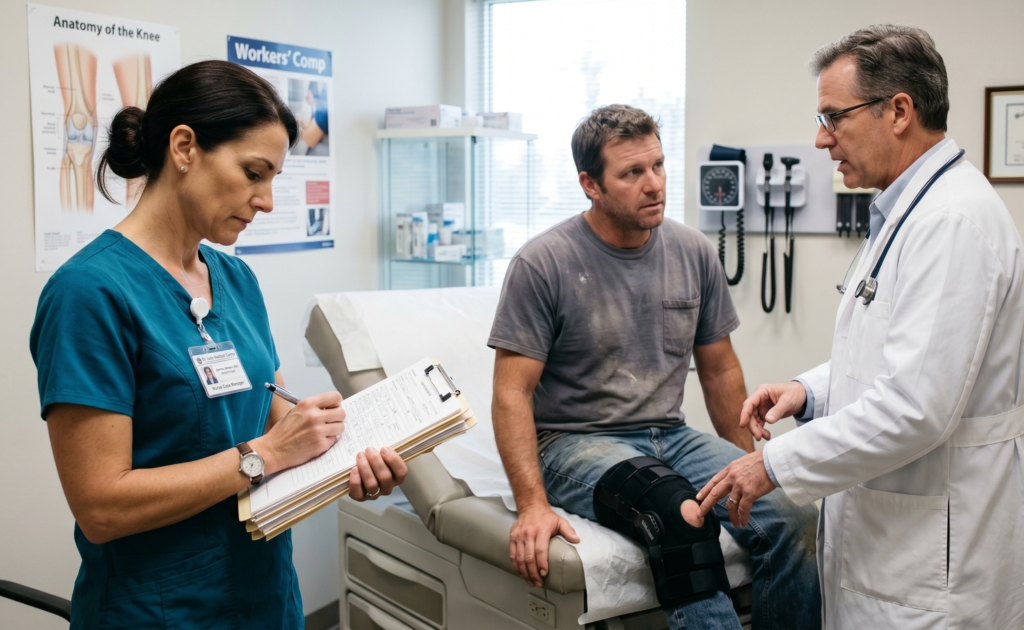
- Attending your doctor visits. She may ask to join you in the exam room, where she can steer the conversation toward a faster return to work.
- “Updating” your doctor. She may relay the insurer’s preferences about light duty or treatment limits before your doctor decides.
- Casual check-in calls. Friendly questions about your weekend, your chores, or your “good days” can end up documented as evidence that you are less limited than you are.
- Pushing the timeline. Gentle pressure to return to work sooner can appear long before your body is ready.
The Helpful Side vs. The Reporting Side
| What It Looks Like | The Helpful Side | The Reporting Side |
|---|---|---|
| Scheduling appointments | Saves you time and phone calls | Tracks delays and missed visits |
| Joining doctor visits | Helps explain medical terms | Influences return-to-work notes |
| Friendly phone calls | Emotional support and answers | Notes on your daily activity level |
| Who pays her | — | Typically the insurance company |
The Doctor’s Office Boundary Workers Often Forget
One of the most sensitive moments is when a nurse case manager asks to be present inside the exam room during your appointment. Many workers assume this is simply required. In reality, the rules around private medical conversations vary widely.
State laws vary significantly here. In some states, a worker generally has the right to ask that a case manager wait in the lobby and speak with the doctor separately, rather than sit in on the private exam. In other states the rules are different. Attorneys often recommend confirming your local rights before assuming you have no say.
The exam room is where decisions about your restrictions and return to work are shaped. Understanding who is allowed to be in that room, and in what role, is generally considered an important part of protecting a claim.
Approaches Injured Workers Commonly Consider
While nothing here is legal or medical advice, the following reflects how the process is generally navigated. Standard guidelines suggest that awareness and consistency are the strongest forms of protection:
- Polite professionalism. Treating the case manager courteously while remembering she is part of the claims process, not part of your personal care team.
- Honest consistency. Describing your symptoms the same way to everyone tends to protect credibility far more than minimizing or exaggerating them.
- Careful casual talk. Many attorneys note that “small talk” about activities, hobbies, or chores can reappear later in a written report.
- Knowing your state’s rules. Because procedures differ so dramatically, understanding your local rights about exam-room presence and medical privacy is generally considered essential.
Federal workplace-safety standards do not govern these state benefit rules, but they help define what a safe jobsite and a fair injury response should look like. You can review official worker protections directly at the U.S. Occupational Safety and Health Administration (OSHA).
For a broader walkthrough of how a construction claim moves from injury to resolution, our complete workers’ compensation guide explains each stage in plain language.
Remember: A nurse case manager can be genuinely useful, but she is not neutral when the insurer pays her. Knowing what she is there to do is the first step toward keeping the relationship in perspective. State laws vary significantly, and the specifics of your situation always matter.
See Where You Stand Before Your Next Call
If a nurse case manager has entered your claim, you are likely at a stage where the decisions ahead carry real weight, and the uncertainty is exhausting. Before your next appointment or phone call, it helps to understand the potential value and direction of your claim. Try the free, anonymous Benefits Estimator at HardHat Rights to get a clearer picture of your situation in minutes, with no names and no pressure. Start your free Benefits Estimator here and take the guesswork out of what comes next.
Disclaimer: This website is for informational purposes only and does not constitute legal or medical advice. The content provided is not intended to be a substitute for professional medical advice, diagnosis, or treatment. Benefit estimates are approximations based on standard state formulas and do not account for your state’s specific caps or your individual circumstances. Always consult a licensed workers’ compensation attorney in your state for legal advice, and a qualified health provider regarding any medical conditions or treatment.