Pain and Suffering: Why Workers’ Comp Doesn’t Pay It (And How You Still Can Get It)
After a serious jobsite injury, one question quietly haunts almost every construction worker: “What about everything this is putting me through?” The sleepless nights, the pain that never fully leaves, the hobbies you can no longer enjoy, the strain on your family. It feels obvious that this should be worth something. Then the comp check arrives, and it covers none of it.
This is one of the most painful surprises in the entire system. The losses that hurt the most are often the exact losses workers’ compensation was never built to pay. Understanding why — and where that money can actually come from — is one of the most important things an injured worker can learn.
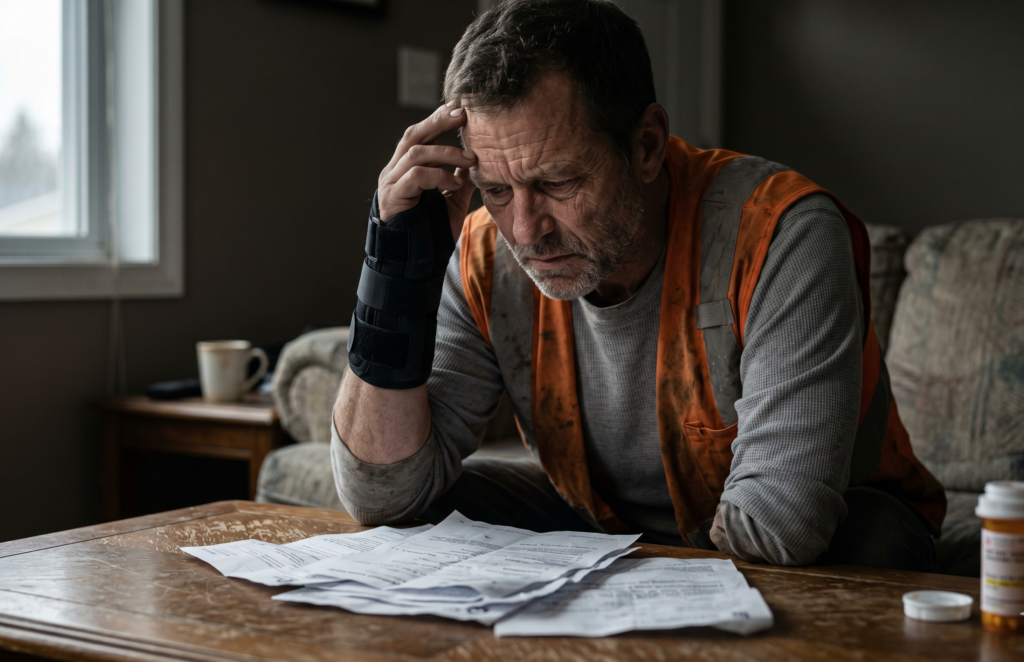
The Grand Bargain That Erased Your Pain and Suffering
Workers’ compensation runs on a trade-off often called the “grand bargain.” In exchange for fast, guaranteed, no-fault benefits, the system generally strips out your right to sue your employer — and with it, the right to be paid for pain and suffering.
The logic is cold but consistent. Because comp pays regardless of fault, it limits what it pays to a fixed menu of economic items. Medical care and a slice of your lost wages are in. The human cost of the injury is deliberately left out.
The distinction that catches everyone off guard: Workers’ comp is a no-fault system. It pays for medical bills and partial wages, but it generally does not pay one cent for pain, suffering, emotional distress, or loss of enjoyment of life. Those are considered “non-economic” damages, and the comp system was designed to exclude them.
What Workers’ Comp Actually Pays — And What It Skips
Seeing the two side by side makes the gap impossible to miss. Standard workers’ comp benefits are limited by formula, while the losses people feel most deeply fall outside the system entirely.
| Type of Loss | Covered by Workers’ Comp? |
|---|---|
| Medical treatment for the injury | Generally yes |
| A percentage of lost wages | Usually partial (often around two-thirds) |
| Permanent impairment rating | Yes, but formula-based |
| Physical pain and ongoing discomfort | Generally not paid |
| Emotional distress and mental anguish | Generally not paid |
| Loss of enjoyment of life | Generally not paid |
This is why a worker can have an “approved” claim and still feel shortchanged. The claim is doing exactly what comp claims do — and that was never going to include the suffering itself.
The Confusion Insurers Are Happy to Leave Alone
Many workers assume a permanent impairment rating is the system’s version of pain and suffering. It is not. An impairment rating measures loss of function — how much a body part no longer works — using medical guidelines and a state formula. It does not measure how much you hurt, how poorly you sleep, or how much of your life the injury has taken.
Insurers rarely rush to clarify this. When a worker believes the impairment payment already accounts for their suffering, they are far less likely to ask the one question that matters most: is there another claim entirely that does pay for it?
Insurer tactic to watch for: Adjusters may frame an impairment or settlement figure as “compensation for everything you’ve been through.” That phrasing blurs the line on purpose. Attorneys often recommend treating an impairment rating and pain-and-suffering damages as two completely separate concepts.
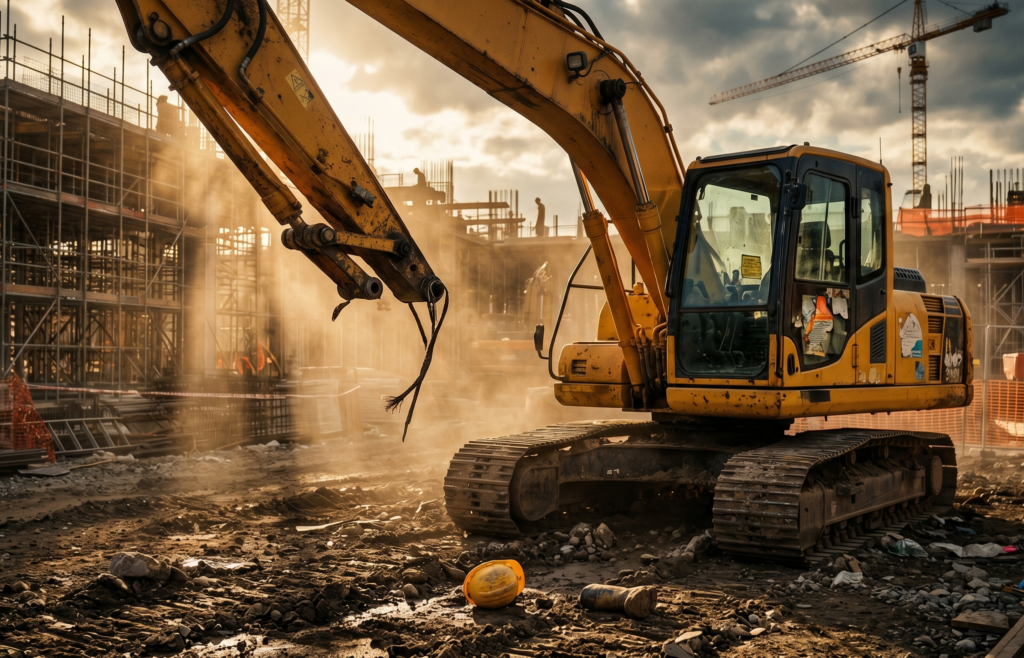
The Door That Stays Open: Third-Party Claims
Here is the part that changes the entire picture. The comp bargain only blocks claims against your employer. It generally does not block a claim against a different company whose negligence helped cause your injury. That separate claim is called a third-party claim — and because it is based on fault, it can pursue the full range of damages, including pain and suffering.
On a crowded jobsite, the parties who are not your employer are everywhere. A pain-and-suffering recovery may become possible when the harm was caused or worsened by:
- Equipment manufacturers, when a defective tool, ladder, lift, or machine fails during normal use.
- General contractors or other subcontractors, when a crew you do not work for creates a hazard.
- Property owners, in certain cases involving known dangers or unsafe premises.
- Negligent drivers, when a vehicle accident happens while you are on the job.
- Maintenance or service companies, when neglected upkeep leads to a failure.
The common thread is simple: if a company that is not your direct employer contributed to your injury, the door to full damages — pain and suffering included — may be open.
How a Pain-and-Suffering Case Is Built
Non-economic damages are not pulled from thin air. A third-party claim generally has to show that someone broke a recognized duty of care or safety standard. Construction is one of the most heavily regulated industries in the country, and those federal rules create a clear baseline for what responsible companies are expected to do.
When a guard was missing, a lift was overloaded, or a known hazard went unaddressed, that failure can become powerful evidence of negligence. You can review the federal safety standards that responsible employers and contractors are expected to follow directly through the U.S. Occupational Safety and Health Administration (OSHA), the agency that publishes and enforces them.
For pain and suffering specifically, the evidence tends to be deeply human: consistent medical records, documentation of ongoing treatment, and an honest record of how daily life has changed. For a broader walkthrough of how a construction injury moves from the first report to a full resolution, our complete workers’ compensation guide explains each stage in plain language.
State Rules That Can Quietly Shrink or End Recovery
This is where strong claims often slip away unnoticed. A comp claim and a third-party claim run on completely different clocks, and the rules around pain-and-suffering damages shift dramatically from state to state.
State laws vary significantly. The deadline to file a third-party negligence claim — the statute of limitations — is generally measured in years, while the deadline to report a comp injury may be measured in days. Some states also reduce non-economic damages based on the injured worker’s share of fault, and a few cap them outright. Standard guidelines suggest confirming the specific deadlines and damage rules that apply where the injury occurred, because a missed window generally cannot be reopened.
There is also a connection most workers never see coming. When a third-party claim succeeds, the comp insurer that already paid your medical bills and wages may be entitled to be repaid out of that recovery through what is known as a lien or subrogation interest. This rarely makes a third-party claim pointless — but it is a major reason the two cases are generally evaluated together rather than separately.
Approaches Injured Workers Commonly Consider
While nothing here is legal or medical advice, the following reflects how construction injuries with a possible pain-and-suffering angle are generally navigated. Attorneys often recommend treating documentation as the foundation:
- Separating the two questions. What comp will pay is one issue; whether a third party caused the harm is a completely different one that determines whether pain and suffering is even on the table.
- Identifying every company on site. Because liability is frequently shared, knowing which firms were present helps reveal whether a third-party claim exists.
- Documenting the human cost. Records of pain levels, treatment, sleep, mobility, and lost activities are widely considered the backbone of any non-economic damages claim.
- Acting within the deadlines. Because the clocks differ and state rules vary, understanding local time limits early is generally regarded as essential.
Remember: Workers’ comp not paying for your pain does not mean your pain has no value. It means the value generally lives in a different claim. State laws vary significantly, and the specific facts of your jobsite always matter.
Find Out If Your Suffering Has a Path to Payment
If your comp claim is “approved” but it feels like everything you’re actually going through has been ignored, that feeling is not in your head — the system was built to leave it out. The real question is whether a second claim exists that can finally account for it. Far too many workers never ask, simply because no one told them it was possible. Before you assume the comp check is the end of the story, get a clearer picture of the potential value and direction of your situation. Try the free, anonymous Benefits Estimator at HardHat Rights — no names, no pressure, just a clearer sense of your options in minutes. Start your free Benefits Estimator here and find out what your next step could look like.
Disclaimer: This website is for informational purposes only and does not constitute legal or medical advice. The content provided is not intended to be a substitute for professional medical advice, diagnosis, or treatment. Benefit estimates are approximations based on standard state formulas and do not account for your state’s specific caps or your individual circumstances. Always consult a licensed workers’ compensation attorney in your state for legal advice, and a qualified health provider regarding any medical conditions or treatment.