Scaffolding Falls: Determining Liability Beyond Standard Workers’ Comp
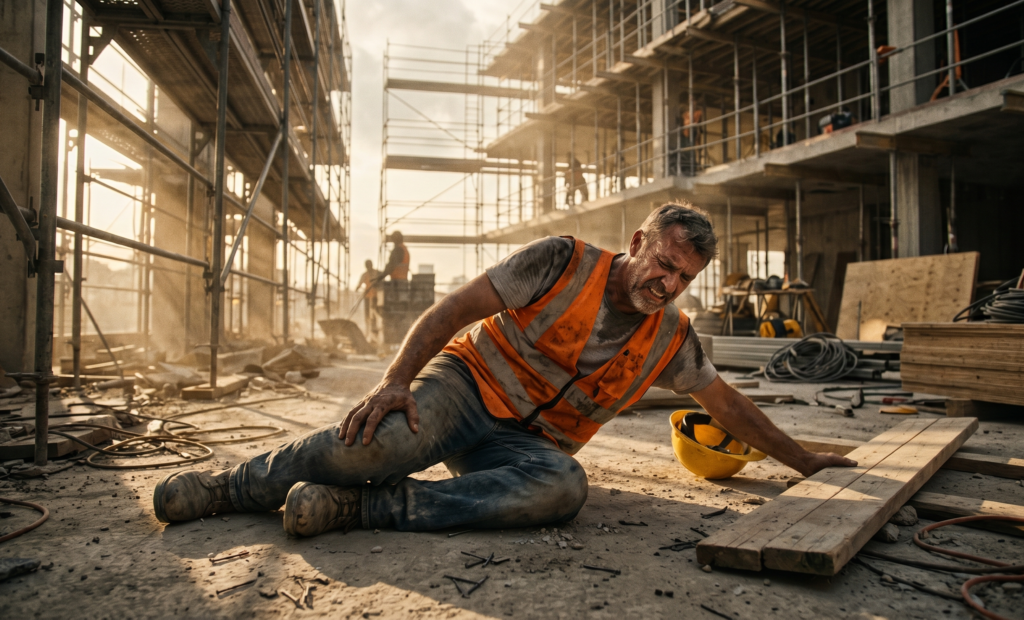
A fall from scaffolding is rarely a simple accident. For a construction worker, it can mean months of surgery, lost income, and a recovery that never quite reaches one hundred percent. Most injured workers are told the same thing in the first week: “File your workers’ comp claim, and that’s that.” What many are never told is that a scaffolding fall is one of the few construction injuries where a second, far larger source of recovery may exist alongside workers’ compensation.
Understanding the difference between these two paths is not a technicality. It can be the difference between covering your medical bills and recovering for the full scope of what the injury actually cost you.
Why Workers’ Comp Alone Often Falls Short
Workers’ compensation is designed as a trade-off. In exchange for guaranteed benefits regardless of fault, the system generally limits what an injured worker can recover from their direct employer. In most states, comp benefits cover medical treatment and a portion of lost wages, but they typically do not pay for full lost earnings, pain and suffering, or the long-term human cost of a serious fall.
For a minor injury, that trade-off can be reasonable. For a multi-story scaffolding fall involving spinal damage, traumatic brain injury, or permanent disability, the gap between what comp pays and what the injury truly costs can be enormous.
The point most workers miss: Workers’ comp generally bars you from suing your own employer. It does not automatically bar a claim against a different company whose negligence contributed to the fall. That distinction is the entire foundation of third-party liability.
The Concept of Third-Party Liability
On a typical construction site, your employer is only one of many companies present. A scaffolding fall may involve a general contractor, a scaffold rental company, an equipment manufacturer, a property owner, or an entirely separate subcontractor. When the negligence of one of these third parties contributes to a fall, a separate legal claim may exist that lives outside the workers’ comp system.
Unlike a comp claim, a third-party claim is generally based on fault and can seek the full range of damages. Attorneys often describe these two paths as running on parallel tracks: one provides immediate, no-fault benefits, while the other pursues the broader losses comp leaves behind.
| Factor | Workers’ Comp Claim | Third-Party Liability Claim |
|---|---|---|
| Who it targets | Your direct employer’s insurer | A separate at-fault company |
| Fault required | No — benefits are no-fault | Yes — negligence must be shown |
| Lost wages | Usually a partial percentage | Potentially full lost earnings |
| Pain and suffering | Generally not available | Often recoverable |
| Typical timeline | Benefits begin relatively quickly | Longer, litigation-driven process |
Who May Share Liability in a Scaffolding Fall
Determining liability beyond comp begins with mapping every party whose decisions touched the scaffold. Standard guidelines suggest that responsibility for scaffold safety is frequently shared across multiple companies, not concentrated in one. Parties that often come under review include:
- The general contractor, which generally holds broad responsibility for overall site safety and coordination.
- The scaffold erection or rental company, if the structure was assembled, inspected, or maintained improperly.
- The equipment manufacturer, when a defective plank, coupler, guardrail, or component fails under normal use.
- The property owner, in certain situations involving known hazards or unsafe premises.
- Another subcontractor, whose crew created a dangerous condition near or on the scaffold.
The Role of Safety Standards in Proving Negligence
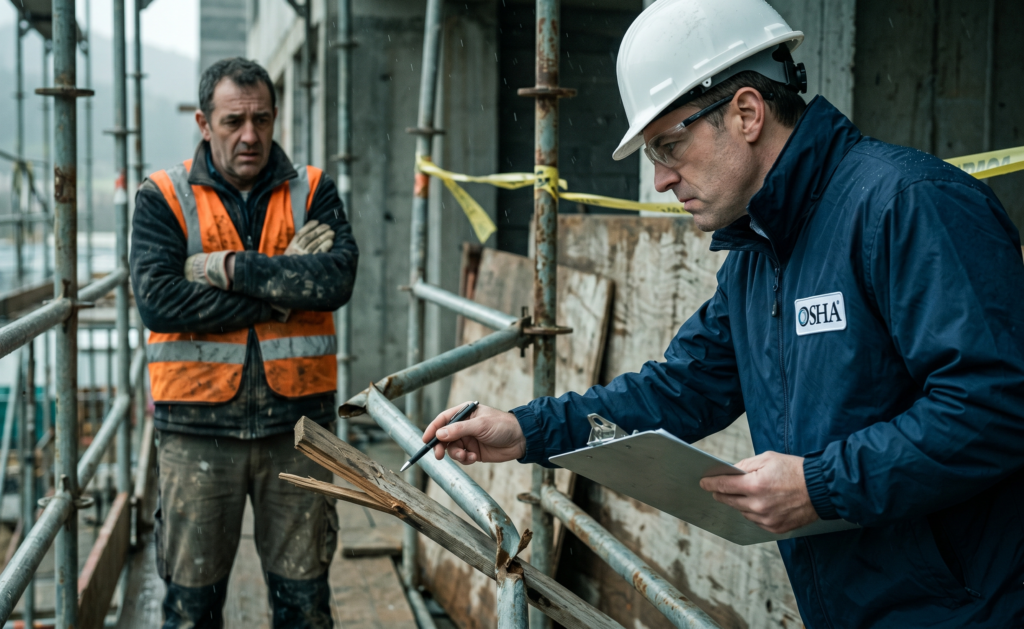
Liability claims rarely turn on opinion alone. They are often built on whether a recognized safety standard was violated. Scaffolding is one of the most heavily regulated areas of construction precisely because falls from height are so often catastrophic, and federal standards set clear expectations for guardrails, planking, capacity, and inspection.
When a scaffold lacked required fall protection, was overloaded, or was never properly inspected, that violation can become powerful evidence of negligence in a third-party claim. You can review the official federal scaffolding requirements directly through the U.S. Occupational Safety and Health Administration (OSHA), which publishes the standards that responsible contractors are expected to follow.
Insurer tactic to watch for: After a serious fall, insurers and contractors sometimes move quickly to repair, dismantle, or “clean up” the scaffold before the condition is documented. Once that evidence is gone, proving how the structure failed becomes far harder. Attorneys often emphasize how decisive those first days can be.
How Deadlines and State Rules Change Everything
This is where many strong claims quietly die. A workers’ comp claim and a third-party lawsuit are governed by completely different clocks. The deadline to report a comp injury may be measured in days, while the deadline to file a third-party negligence claim — known as the statute of limitations — is generally measured in years, but varies dramatically from state to state.
State laws vary significantly. The time limits, the rules on shared fault, and even which parties can be sued change from one state to the next. In some states, a portion of fault assigned to the worker can reduce or eliminate recovery; in others, the rules are far more forgiving. Standard guidelines suggest confirming the specific deadlines that apply where the injury occurred, because a missed window generally cannot be reopened.
There is also the matter of the comp “lien.” When a third-party claim succeeds, the workers’ comp insurer that already paid benefits may be entitled to repayment from that recovery. How this interacts with your net result is highly state-specific and is one reason these two claims are usually evaluated together rather than separately.
Approaches Injured Workers Commonly Consider
While nothing here is legal or medical advice, the following reflects how serious scaffolding falls are generally navigated. Attorneys often recommend treating documentation as the foundation of both claims:
- Preserving the scene. Photographs of the scaffold, the failure point, and the surrounding area are often the most valuable evidence, especially before anything is repaired.
- Identifying every company on site. Because liability is frequently shared, knowing which firms were present helps reveal whether a third-party claim exists at all.
- Keeping the two claims aligned. Statements made in a comp claim can affect a third-party case, so consistency across both is generally considered important.
- Acting within the deadlines. Because the clocks differ and state rules vary, understanding local time limits early is widely regarded as essential.
For a broader walkthrough of how a construction injury moves from the first report to a full resolution, our complete workers’ compensation guide explains each stage in plain language.
Remember: A scaffolding fall can open two doors, not one. Workers’ comp addresses the immediate medical and wage support, while a third-party claim may address everything comp leaves on the table. State laws vary significantly, and the specifics of your jobsite always matter.
See What Your Claim May Truly Be Worth
A scaffolding fall can leave you facing mounting bills while a comp check covers only a fraction of what you lost — and the possibility of a larger third-party claim often goes completely unexamined. Before you assume workers’ comp is the end of the story, it helps to understand the potential value and direction of your situation. Try the free, anonymous Benefits Estimator at HardHat Rights to get a clearer picture in minutes, with no names and no pressure. Start your free Benefits Estimator here and find out what your next step could look like.
Disclaimer: This website is for informational purposes only and does not constitute legal or medical advice. The content provided is not intended to be a substitute for professional medical advice, diagnosis, or treatment. Benefit estimates are approximations based on standard state formulas and do not account for your state’s specific caps or your individual circumstances. Always consult a licensed workers’ compensation attorney in your state for legal advice, and a qualified health provider regarding any medical conditions or treatment.