Category: Beyond Workers’ Comp

  • Toxic Exposure on Site: Asbestos, Silica Dust, and Occupational Disease Claims


    Toxic Exposure on Site: Asbestos, Silica Dust, and Occupational Disease Claims

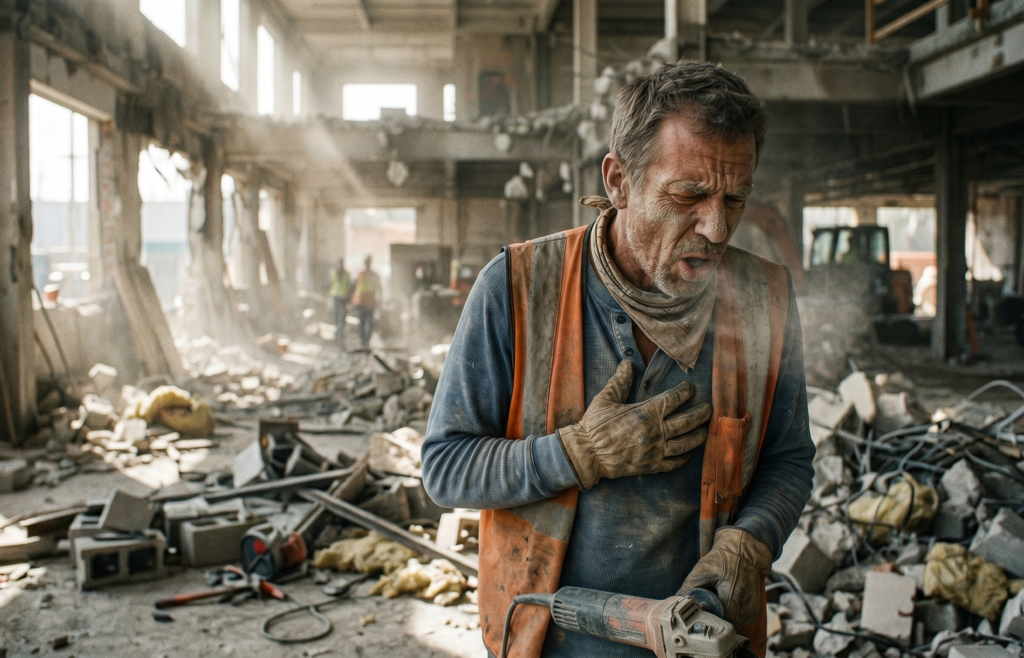
    The injury you can see is the one everyone believes. A fall, a crushed hand, a bone snapped on a scaffold — there’s an ambulance, a report, a witness. But some of the most serious damage a construction career can do never shows up on the day it happens. It arrives years later, in a doctor’s office, in the form of a cough that won’t quit, a chest X-ray with shadows on it, or a diagnosis with a name you can’t pronounce. This is occupational disease — illness caused not by one accident, but by what you breathed, touched, and carried home on your clothes for years. And it is one of the most under-claimed, aggressively denied corners of the entire workers’ compensation system.

    What injured tradespeople are rarely told is that an illness from toxic exposure on a jobsite can be just as compensable as a broken back — but only if the connection between the work and the disease is built carefully, and early. The insurer is counting on the years between the exposure and the diagnosis to bury that connection.
    The Hazards Hiding in Plain Sight on a Construction Site

    Toxic exposure in the trades is not rare or exotic. It is built into the materials, the dust, and the fumes of everyday work. Many of these substances cause harm slowly and silently, which is exactly why they are so dangerous. The exposures most often tied to occupational disease claims generally include:

    • Silica dust — released when cutting, grinding, or drilling concrete, brick, stone, and tile. Long-term exposure is linked to silicosis, a progressive and irreversible scarring of the lungs.
    • Asbestos — still present in older insulation, flooring, roofing, and pipe wrap. Disturbing it during demolition or renovation can release fibers tied to asbestosis, lung disease, and mesothelioma decades later.
    • Welding fumes and heavy metals — including manganese, lead, and cadmium, associated with respiratory and neurological conditions.
    • Solvents, adhesives, and isocyanates — found in paints, coatings, and foams, linked to occupational asthma and chemical sensitivity.
    • Wood dust and chemical-treated materials — connected to chronic respiratory illness with prolonged exposure.

    The point most workers miss: An occupational disease is generally just as compensable as a traumatic injury. The law in most states does not require a single accident — it recognizes that the job itself, over time, can cause an illness. The fight is almost never about whether you are sick. It is about whether your sickness can be tied to your work rather than to your life outside it.

    Why Insurers Fight Occupational Disease Claims So Hard

    A traumatic injury happens on a date, at a place, in front of people. An occupational disease has none of that built-in proof — and an insurance adjuster knows it. Because years often pass between the exposure and the diagnosis, the insurer has room to point the finger almost anywhere. The most common arguments generally follow a familiar script:

    1. “It wasn’t our worksite.” With a career spanning many employers and many jobs, the insurer argues the exposure happened somewhere else — on someone else’s watch.
    2. “It’s your lifestyle.” Smoking, hobbies, or where you live get blamed for a lung condition that years of dust and fumes helped produce.
    3. “You filed too late.” Because the illness appeared long after the exposure, the insurer argues the reporting window or statute of limitations has already closed.
    4. “There’s no proof of exposure.” If no one documented the dust, the fumes, or the lack of protection at the time, the insurer treats the exposure as if it never happened.

    Every one of these arguments attacks the same weak point: the gap between when the harm was done and when it was discovered. Attorneys often emphasize that the worker who understands these defenses — and whose record answers them in advance — stands in a far stronger position than the one who waits to react after a denial letter arrives.

    Insurer tactic to watch for: On disease claims, the insurer will frequently request a worker’s full employment and medical history, then use it to spread blame across other jobs or personal habits. A clear record of where, when, and how you were exposed is often what keeps the claim anchored to the work that actually caused the harm.

    How an Occupational Disease Claim Is Proven: The Causation Record

    Because there is no accident report to lean on, a toxic exposure claim is built almost entirely on the medical and occupational record created over time. The legal concept at the heart of these claims is causation — the documented link between the specific substances on your jobsites and the specific illness in your body. Standard guidelines suggest the strongest records tend to share a few common threads:

    Element of ProofWhat It EstablishesWhy the Insurer Cares
    An exposure historyThe substances, sites, and time periods you worked around themTies the illness to the work, not to lifestyle or other employers
    A physician’s causation opinionA doctor stating the work exposure is a major contributing causeThis medical opinion is often the deciding factor in the claim
    Prompt reporting after diagnosisThat you acted once the illness was identified as work-relatedUndercuts the “you filed too late” defense
    Diagnostic evidenceImaging, breathing tests, and specialist findings over timeCounters the argument that the condition is minor or unrelated

    Of these, the physician’s causation opinion generally carries the most weight. Attorneys often recommend that a worker describe their exposure in concrete detail to the treating doctor — not “I did construction,” but the specifics: years spent cutting concrete without dust suppression, demolition of old insulation, the absence of a respirator on certain jobs. A doctor cannot connect an illness to an exposure they were never told about, and a vague history produces a vague opinion that an insurer can dismiss with ease.

    The Hidden Clock: Occupational Disease and the “Date of Injury”

    This is where strong disease claims vanish without a trace. With a fall, the date of injury is obvious. With an occupational illness, there is no obvious date — and that ambiguity creates one of the most dangerous traps in the system. Many states do not start the clock on the day the exposure happened, but on the day you knew, or reasonably should have known, that your illness was connected to your work. For many workers, that date is the moment a doctor first explains the diagnosis.

    State laws vary significantly. The definition of the “date of injury” for an occupational disease, the reporting window, and the statute of limitations all change drastically from one state to the next — some measured from the date of diagnosis, others from the last date of exposure. Standard guidelines suggest confirming the exact deadlines that apply where you worked, because a missed window generally cannot be reopened later, no matter how serious the illness.

    Federal regulators treat these hazards as among the most serious on any jobsite. You can review official guidance on respirable crystalline silica, asbestos, and other airborne exposures directly through the U.S. Occupational Safety and Health Administration (OSHA), which sets the very exposure limits that protect workers in the trades.

    For a broader walkthrough of how a construction claim moves from the first report all the way to a resolution, our complete workers’ compensation guide explains each stage in plain language.

    See What Your Occupational Disease Claim May Truly Be Worth

    An occupational disease can quietly take away the lungs, the strength, and the future a trade career was supposed to build. Because the illness shows up long after the exposure, these claims are often undervalued or denied outright — and many workers assume nothing can be done. Before accepting that, it helps to understand the potential value and direction of your situation. Try the free, anonymous Benefits Estimator at HardHat Rights to get a clearer picture in minutes, with no names and no pressure. Start your free Benefits Estimator here and find out what your next step could look like.

  • Repetitive Stress Injuries (RSI) in Construction: Proving It Happened at Work


    Repetitive Stress Injuries (RSI) in Construction: Proving It Happened at Work

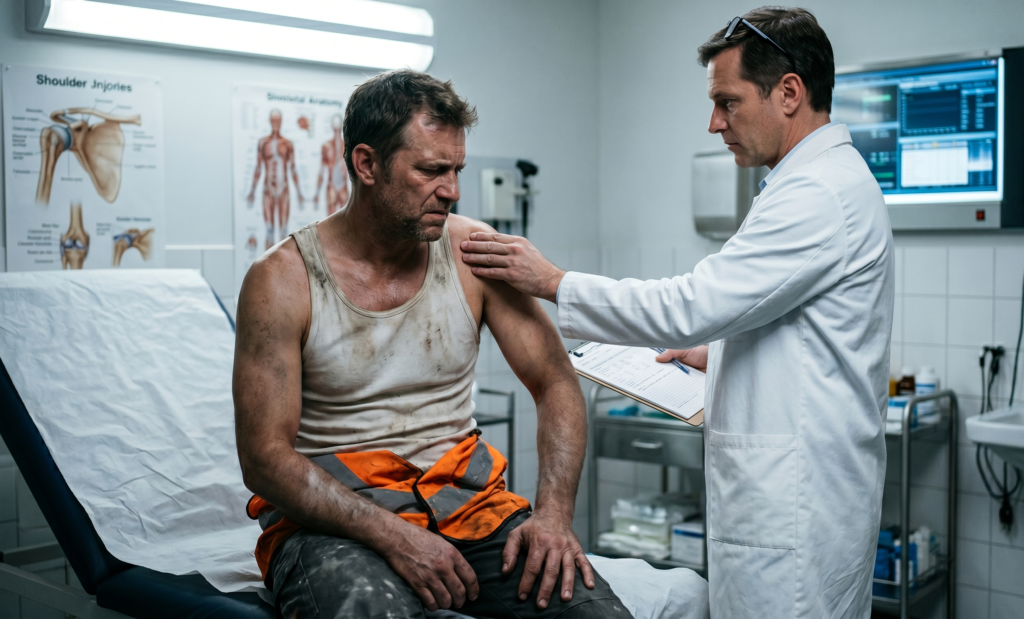
    There was no fall. No crane, no scaffold, no single moment you can point to and say, “That’s when it happened.” Instead, the damage built quietly over months and years — every swing of the hammer, every trigger pull on the impact wrench, every hour overhead running conduit. Then one morning your hand won’t close around a cup of coffee, your shoulder won’t lift the drill, and the pain that used to fade overnight simply doesn’t leave anymore. This is the hidden epidemic of repetitive stress injuries in construction, and it is one of the hardest claims to win — not because the injury isn’t real, but because there is no dramatic accident to prove.

    What injured tradespeople are rarely told is that the insurance company is counting on exactly that. With no single event to point to, an RSI claim lives or dies on documentation — and the gaps in that documentation are precisely where these claims are quietly denied.


    What Counts as a Repetitive Stress Injury on a Construction Site

    Repetitive stress injuries — sometimes called repetitive strain injuries or cumulative trauma disorders — develop when the same motion, vibration, or load wears down soft tissue faster than the body can repair it. In the trades, they are not an exception. They are an occupational reality of work that demands the same forceful movements thousands of times a week. The most common patterns generally include:

    • Carpal tunnel syndrome — nerve compression in the wrist, common among workers who grip vibrating tools or perform constant fastening and gripping.
    • Rotator cuff and shoulder tendinitis — frequent in electricians, drywallers, and painters who work overhead for hours at a time.
    • Tennis and golfer’s elbow (epicondylitis) — tied to repeated twisting, gripping, and impact from manual and powered tools.
    • Lower back degeneration — the cumulative result of years of lifting, bending, and carrying heavy material.
    • Tendinitis and bursitis of the knees — common among flooring installers, plumbers, and anyone who kneels for a living.
    • Hand-arm vibration syndrome (HAVS) — nerve and circulation damage from prolonged use of jackhammers, grinders, and impact tools.

    The point most workers miss: An RSI is just as compensable as a broken bone in most systems. The law generally does not require a single accident — it recognizes that an injury can be caused by the job itself, over time. The challenge is almost never whether the injury is “real.” It is whether you can connect it to your work on paper.

    Why Insurers Fight RSI Claims So Hard

    A fall from a ladder has witnesses, an incident report, and an ambulance run. A repetitive stress injury has none of that — and an insurance adjuster knows it. Because the injury developed slowly and invisibly, the insurer has room to argue it came from somewhere other than your job. The most common tactics generally follow a predictable script:

    1. “It’s just aging.” The insurer points to normal wear-and-tear or degenerative changes on a scan and argues your years on Earth, not your years on the job, caused the damage.
    2. “It’s a pre-existing condition.” Any old injury or prior doctor’s visit becomes the supposed “real” cause — sidestepping that the job made it dramatically worse.
    3. “It happened at home.” A hobby, a side job, or a weekend project gets blamed for an injury that decades of trade work produced.
    4. “You reported it too late.” Because there was no single accident, the insurer argues you missed the reporting window — turning the slow nature of the injury against you.

    Each of these arguments targets the same weak point: the absence of a clear, documented link between the work and the injury. Attorneys often emphasize that the worker who anticipates these arguments — and builds a record that answers them in advance — is in a far stronger position than the one who waits to react.

    Insurer tactic to watch for: On RSI claims, the insurer will frequently request years of prior medical records, then comb them for any unrelated ache or old injury to brand the condition “pre-existing.” A documented history of when your work-related symptoms actually began is often what keeps an old, unrelated note from sinking the entire claim.

    How an RSI Is Proven: Building the “Causation” Record

    Because there is no accident report to rely on, an RSI claim is built almost entirely on the medical and occupational record you and your doctors create. The legal concept at the center of every one of these claims is causation — the documented connection between the specific demands of your job and the specific injury in your body. Standard guidelines suggest that the strongest records tend to share a few common threads:

    Element of ProofWhat It EstablishesWhy the Insurer Cares
    Early symptom reportingThat you raised the issue as soon as it interfered with workUndercuts the “you reported it too late” defense
    A detailed job-duty descriptionThe exact repetitive motions, tools, and forces your trade requiresLinks the injury to the work, not to aging or hobbies
    A physician’s causation opinionA doctor stating the work is a major contributing causeThis medical opinion is often the deciding factor in the claim
    Consistent treatment historyThat the symptoms are ongoing and genuinely limitingCounters the argument that the injury is minor or invented

    Of these, the physician’s causation opinion generally carries the most weight. Attorneys often recommend that a worker describe their job in concrete detail to the treating doctor — not “I do construction,” but the specific motions: hours per day gripping a vibrating tool, repetitions of overhead work, the weight lifted and how often. A doctor cannot connect an injury to a job they don’t understand, and a vague history produces a vague opinion that an insurer can easily dismiss.

    The Reporting Clock: An RSI’s Most Dangerous Deadline

    This is where strong RSI claims disappear without a sound. With a fall, the date of injury is obvious. With a repetitive stress injury, there is no obvious date — and that ambiguity creates one of the most dangerous traps in the entire system. Many states do not start the reporting clock on the day the damage began, but on the day you knew, or reasonably should have known, that your condition was connected to your work. That date is often the moment a doctor first tells you the injury is job-related.

    State laws vary significantly. Reporting windows for cumulative injuries, the definition of the “date of injury,” and the statute of limitations all change drastically from one state to the next — some measured in days from awareness, others in years. Standard guidelines suggest confirming the specific deadlines that apply where you work, because a missed reporting window generally cannot be reopened later, no matter how strong the underlying injury claim is.

    Federal workplace standards recognize how widespread these injuries are. You can review official guidance on ergonomic hazards and musculoskeletal disorders directly through the U.S. Occupational Safety and Health Administration (OSHA), which documents the very work conditions that cause repetitive stress injuries in the trades.

    For a broader walkthrough of how a construction injury moves from the first report all the way to a resolution, our complete workers’ compensation guide explains each stage in plain language.

    See What Your Repetitive Stress Injury Claim May Truly Be Worth

    A repetitive stress injury can quietly end a trade career — the gripping, lifting, and overhead work that paid your bills are the same motions you may no longer be able to do. Because there’s no dramatic accident, these claims are often undervalued or denied outright, leaving workers to assume nothing can be done. Before you accept that, it helps to understand the potential value and direction of your situation. Try the free, anonymous Benefits Estimator at HardHat Rights to get a clearer picture in minutes, with no names and no pressure. Start your free Benefits Estimator here and find out what your next step could look like.
  • Electrocution and Shock Injuries on the Job Site: Long-Term Claim Strategies


    Electrocution and Shock Injuries on the Job Site: Long-Term Claim Strategies

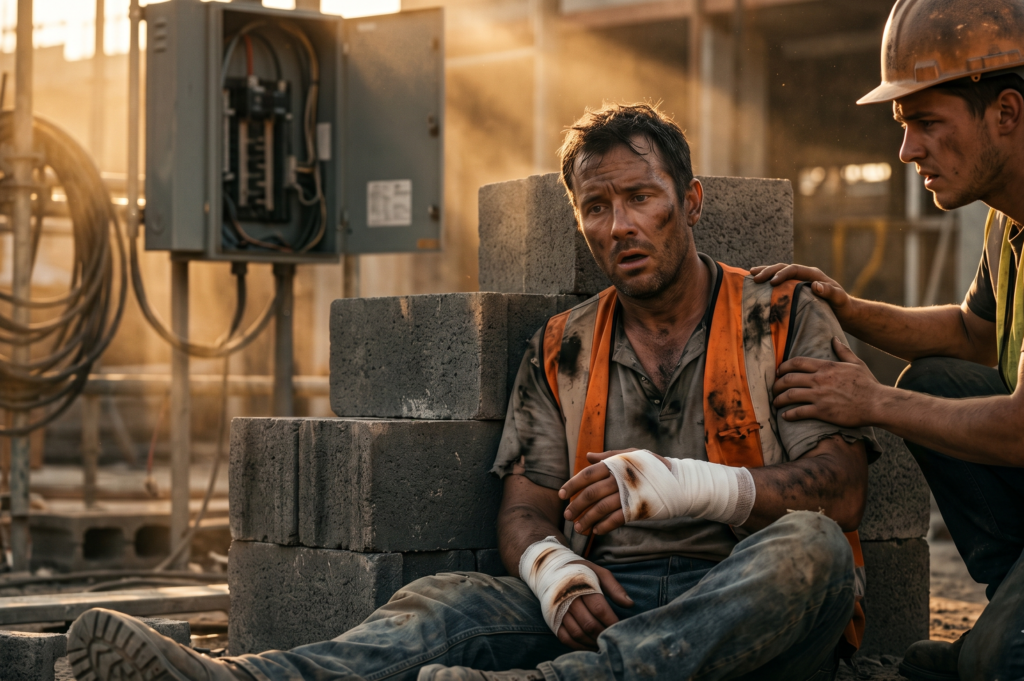
    Electricity gives almost no warning. One contact with a live wire, an energized panel, or a power line a crane drifted too close to, and a worker can be thrown, burned, or stopped cold in a fraction of a second. On a construction site, electrical contact is one of the “Fatal Four” — the cluster of hazards responsible for the largest share of worker deaths year after year. For those who survive, the real fight often starts months later, when the injuries no one photographed begin to surface.

    That delay is the central problem with an electrical injury claim. The visible burn heals, the claim is quietly valued as if it were minor, and the long-term nerve, cardiac, and neurological damage that electricity leaves behind is never accounted for. Understanding how shock injuries unfold over time is what separates a short payout from a claim that protects you for years.

    Why Electrical Injuries Are Different From Any Other Job Site Injury

    A broken bone is visible on an X-ray the day it happens. An electrical injury is the opposite: the most serious damage frequently travels inside the body, along the path the current took, and may not declare itself for weeks or months. Current entering at the hand and exiting at the foot can injure muscle, nerves, and organs all along that route while leaving only two small marks on the skin.

    This creates a dangerous gap. The early medical record often describes a “minor burn,” and that first impression tends to anchor how the claim is valued — even though the true picture is still developing. Standard guidelines suggest that electrical injuries are evaluated very differently from thermal burns precisely because of this hidden, delayed progression.

    The point most workers miss: With electrical trauma, the size of the visible wound rarely reflects the size of the internal injury. A claim valued on the first day’s “minor” note can badly underestimate what the body reveals months later.

    The Long-Term Injuries Electricity Leaves Behind

    The reason long-term strategy matters so much with shock injuries is that the most disabling consequences are often the ones that arrive late. Survivors of a significant electrical contact commonly report symptoms that build over time, including:

    • Nerve damage (neuropathy) — chronic pain, numbness, tingling, or weakness that can appear or worsen weeks after the incident.
    • Cardiac effects — irregular heartbeat or other heart rhythm changes, since current passing near the chest can disturb the heart.
    • Neurological and cognitive changes — memory problems, difficulty concentrating, headaches, anxiety, and sleep disruption.
    • Deep tissue and muscle injury — damage well beneath the skin that imaging at the surface can completely miss.
    • Psychological trauma — including post-traumatic stress, which is frequently overlooked in electrical injury claims.

    Many of these problems are progressive. A worker discharged with a clean bill of health can return months later with neuropathy or cardiac symptoms that trace directly back to the shock. Attorneys often recommend treating an electrical injury as a condition that needs to be monitored over time, not closed out the moment the burn heals.

    Insurer tactic to watch for: A common move is to push for a fast settlement while the injury still looks minor. Once a claim is settled and closed, the door on future nerve, cardiac, or neurological treatment generally closes with it — even if serious symptoms emerge afterward. Standard guidelines suggest that the speed of an early offer is often a signal to slow down, not to sign.

    How Electrical Accidents Happen on Construction Sites

    Most serious electrical contact on a job site traces back to a handful of recurring, preventable failures rather than to worker carelessness. Recognizing the cause matters, because it can point to who — beyond your direct employer — may share responsibility.

    1. Contact with overhead power lines — often involving cranes, scaffolding, ladders, or aerial lifts brought too close to energized lines.
    2. Contact with live wires and energized parts — circuits that were never properly de-energized before work began.
    3. Missing lockout/tagout procedures — equipment that should have been shut down and secured was left energized.
    4. Damaged or defective tools and cords — frayed insulation, faulty equipment, or a defective product that failed.
    5. Improper grounding or missing ground-fault protection — wiring conditions that turn a routine task into a shock hazard.

    Federal safety standards address how electrical hazards are supposed to be controlled on a job site, from de-energizing circuits to maintaining safe distances from power lines. You can review the official requirements directly through the U.S. Occupational Safety and Health Administration (OSHA), which publishes the electrical safety standards responsible contractors are expected to follow.

    The Two Claims an Electrical Injury Can Open

    Workers’ compensation is a no-fault system, which means you generally do not have to prove anyone was negligent to receive benefits. Comp typically covers medical treatment and a portion of lost wages. But comp also limits what you can recover from your own employer, and it usually does not pay for the full human cost of a catastrophic electrical injury.

    That gap is where a second claim can matter. When the shock was caused by a party other than your employer — a defective tool’s manufacturer, a separate electrical subcontractor, a utility company, or a general contractor that controlled site safety — a third-party claim may exist alongside your comp benefits. Unlike comp, that claim is based on fault, and it can reach categories of compensation comp never touches:

    Recovery TypeWorkers’ CompensationPossible Third-Party Claim
    Medical treatmentGenerally coveredGenerally covered
    Lost wagesPartial (a percentage)Potentially full lost earnings
    Pain and sufferingGenerally not paidMay be available
    Future / long-term careLimitedMay address future needs

    Because these two paths interact, the long-term value comp leaves on the table is often exactly what a third-party claim is built to recover. For a broader walkthrough of how a construction injury moves from the first report to a full resolution, our complete workers’ compensation guide explains each stage in plain language.

    Long-Term Claim Strategies That Protect You for Years

    Because electrical injuries evolve, the strategy that protects a worker is built around time, not speed. The principles below reflect how experienced advocates generally approach these claims:

    • Treat the injury as ongoing. Attorneys often recommend that electrical-contact symptoms be followed by specialists — neurology and cardiology, where appropriate — rather than closed out after the burn heals.
    • Document the invisible. Nerve, cardiac, and cognitive symptoms only count if they are recorded. A clear, consistent medical history is generally what connects later symptoms back to the original shock.
    • Be cautious with early settlement. Once a claim is settled, future treatment is usually no longer covered. Standard guidelines suggest that the long-term nature of electrical injuries makes premature settlement especially risky.
    • Identify every party on the site. A defective tool, an energized circuit left unsecured by another contractor, or a utility’s negligence can open the second door comp never touches.

    State laws vary significantly. Reporting windows, statutes of limitations, and the rules on long-term and future medical benefits change dramatically from one state to the next. A workers’ comp claim and a third-party negligence claim also run on completely different clocks. Standard guidelines suggest confirming the specific deadlines that apply where the injury occurred, because a missed window generally cannot be reopened.

    Remember: An electrical injury can open two doors, not one. Workers’ comp addresses the immediate medical and wage support, while a third-party claim may address the long-term nerve, cardiac, and neurological damage comp leaves behind. The defective tool, the unsecured circuit, or the power-line contact often sits at the center of both — and state laws vary significantly.

    See What Your Electrical Injury Claim May Truly Be Worth

    A shock or electrocution injury can look minor on day one and reveal life-changing nerve, heart, and neurological damage months later — long after a fast settlement would have closed your claim for good. Before you assume the first offer reflects what you have actually lost, it helps to understand the potential value and direction of your situation. Try the free, anonymous Benefits Estimator at HardHat Rights to get a clearer picture in minutes, with no names and no pressure. Start your free Benefits Estimator here and find out what your next step could look like.
  • Heavy Machinery Accidents: Crane, Forklift, and Bulldozer Injury Claims


    Heavy Machinery Accidents: Crane, Forklift, and Bulldozer Injury Claims

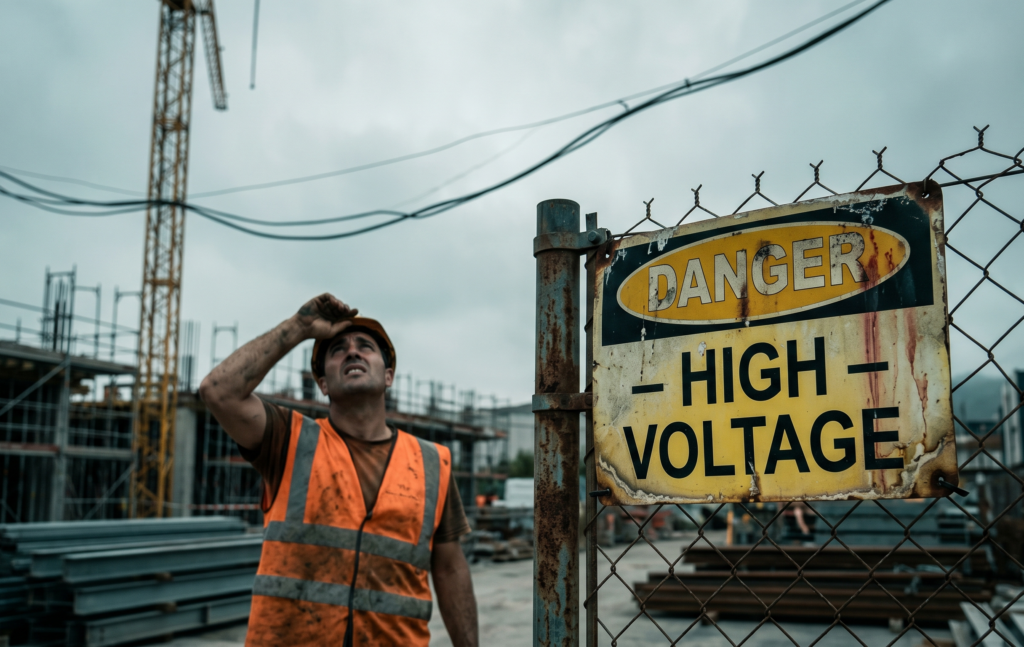
    On a busy jobsite, the machines built to move tons of material in seconds are the same machines that can end a career in an instant. A swinging crane load, a tipping forklift, or a bulldozer with a blind spot the size of a pickup truck leaves almost no margin for error. When something goes wrong, the injuries are rarely minor — crush trauma, amputations, spinal damage, and head injuries are the everyday reality of heavy machinery accidents.

    What injured operators and ground workers are seldom told is that a heavy equipment injury often involves more than one company at fault — and that single fact can completely change what a fair recovery looks like.

    Why Heavy Equipment Injuries Are Different From a Typical Jobsite Accident

    A fall from a ladder usually involves one worker and one moment. A heavy machinery accident is different: it typically brings together an equipment manufacturer, a rental or leasing company, a maintenance contractor, the general contractor, and sometimes a separate operator employed by another firm. Each of those parties has its own duties — and any one of them can be the reason a machine failed.

    That web of responsibility matters because of how compensation works. Workers’ compensation generally pays no matter who was at fault, but it also limits what you can recover from your own employer. When a company other than your employer contributed to the accident, a separate path — often called a third-party claim — may exist alongside your comp benefits.

    The point most workers miss: A defective machine, a skipped inspection, or a negligent operator from another company can open a second claim that workers’ comp alone never touches. Identifying every party on the site is often the difference between a partial recovery and a full one.

    Crane Accidents: When Tons of Steel Swing Out of Control

    Crane work concentrates enormous force into a single point of failure. The most serious crane injuries generally trace back to a handful of recurring causes, and most of them are preventable when the rules are followed:

    • Overloading or exceeding the load chart — pushing the crane past its rated capacity until it tips or the boom buckles.
    • Improper rigging — slings, hooks, or chains that fail and drop a suspended load onto workers below.
    • Contact with power lines — one of the leading causes of crane-related fatalities on construction sites.
    • Inadequate ground or outrigger setup — a crane that settles or tips because the surface was never properly assessed.
    • Failed inspections or skipped maintenance — mechanical defects that a required check should have caught.

    Federal standards require that cranes be inspected and that operators be properly certified for the equipment they run. You can review the official crane and derrick requirements directly through the U.S. Occupational Safety and Health Administration (OSHA), which publishes the standards responsible contractors are expected to follow.

    Insurer tactic to watch for: After a crane incident, the equipment is frequently moved, repaired, or returned to the rental company within days. Once the load chart, the rigging, and the maintenance logs are gone, proving why the crane failed becomes far harder. Attorneys often emphasize how decisive those first days are for preserving the evidence.

    Forklift Injuries: The “Everyday” Machine That Causes the Most Harm

    Forklifts feel routine, and that is exactly why they are so dangerous. Because they are used constantly and treated as ordinary, the safety steps around them are the ones most often cut to save time. Standard guidelines suggest the most common forklift injury patterns include:

    1. Tip-overs — the leading cause of forklift fatalities, often from turning too fast or carrying a raised load.
    2. Struck-by incidents — pedestrians hit by a forklift in a tight aisle or a blind corner.
    3. Falling loads — improperly stacked or secured material dropping onto a worker.
    4. Crushing between the forklift and a fixed object — frequently tied to limited rear visibility.
    5. Falls from the forks — when a forklift is improperly used to lift a person without a proper platform.

    Many forklift injuries point back to a training or maintenance failure — an uncertified operator, brakes that were never serviced, or a warning alarm that was disabled. Each of those can implicate a party beyond your direct employer, which is precisely where a second claim may live.

    Bulldozer and Earthmoving Accidents: Blind Spots and Crush Zones

    Bulldozers, excavators, and other earthmoving equipment combine massive weight with severe visibility limits. The operator often cannot see directly behind or below the blade, and ground workers may not hear the machine over the noise of the site. The result is a category of accidents dominated by backovers, rollovers, and crush injuries.

    Recurring causes generally include the absence of a trained spotter, a missing or disabled backup alarm, operating on unstable or sloped ground, and inadequate separation between machines and workers on foot. When a bulldozer rolls or strikes a worker, the question is rarely “was the worker careless” — it is usually “what site control was missing” that allowed a person and a machine to occupy the same space.

    MachineMost Common Serious InjuryFrequently Linked Failure
    CraneStruck by falling or swinging loadOverloading or rigging failure
    ForkliftCrush or tip-over traumaOperator training or maintenance gap
    Bulldozer / EarthmoverBackover and crush injuriesNo spotter or disabled backup alarm

    The Two Doors a Heavy Machinery Accident Can Open

    Workers’ compensation is a no-fault system, which means you generally do not have to prove negligence to receive benefits. Comp typically covers medical treatment and a portion of lost wages, but it usually does not pay for the full human cost of a catastrophic equipment injury. That gap is exactly where a second claim can matter.

    When a machine was defective, a rental company supplied poorly maintained equipment, or a worker employed by a different contractor operated the machine negligently, a third-party claim may exist outside the comp system. Unlike comp, that claim is based on fault — and it can reach categories of compensation comp never touches:

    • Full lost earnings, rather than the percentage comp typically pays.
    • Pain and suffering for the lasting physical and emotional toll of the injury.
    • Future medical needs tied to permanent impairment or repeated surgeries.

    Because these two paths interact, the value comp leaves on the table is often exactly what a third-party claim is built to recover. For a broader walkthrough of how a construction injury moves from the first report to a full resolution, our complete workers’ compensation guide explains each stage in plain language.

    Deadlines and State Rules That Quietly Decide Your Claim

    This is where strong claims disappear without a sound. A workers’ comp claim and a third-party negligence claim run on completely different clocks. The deadline to report a comp injury may be measured in days, while the deadline to file a negligence claim — the statute of limitations — is generally measured in years, but it varies dramatically from one state to the next.

    State laws vary significantly. Reporting windows, statutes of limitations, and the rules on shared fault all change from state to state. In some states, any fault assigned to the worker can reduce recovery; in others, the rules are far more forgiving. Standard guidelines suggest confirming the specific deadlines that apply where the injury occurred, because a missed window generally cannot be reopened.

    There is also the comp “lien” to consider. When a third-party claim succeeds, the workers’ comp insurer that already paid benefits may be entitled to repayment from that recovery. How this affects your net result is highly state-specific, which is one reason these claims are usually evaluated together rather than separately.

    Remember: A heavy machinery accident can open two doors, not one. Workers’ comp addresses the immediate medical and wage support, while a third-party claim may address everything comp leaves behind. The defect, the missing inspection, or the negligent operator often sits at the center of both — and state laws vary significantly.

    See What Your Heavy Machinery Claim May Truly Be Worth

    A crane, forklift, or bulldozer injury can leave you facing surgeries, lost income, and a recovery that comp checks barely cover — while the possibility of a larger claim built on a defective machine or a negligent contractor goes completely unexamined. Before you assume workers’ comp is the end of the story, it helps to understand the potential value and direction of your situation. Try the free, anonymous Benefits Estimator at HardHat Rights to get a clearer picture in minutes, with no names and no pressure. Start your free Benefits Estimator here and find out what your next step could look like.
  • Trench Collapses: OSHA Violations and Your Right to Maximum Compensation


    Trench Collapses: OSHA Violations and Your Right to Maximum Compensation

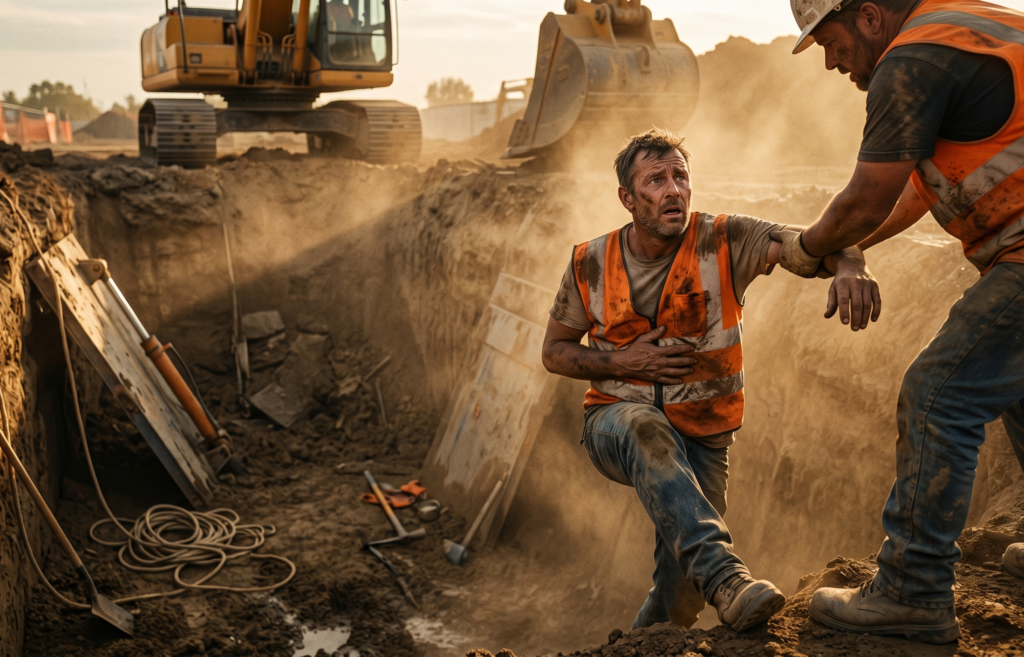
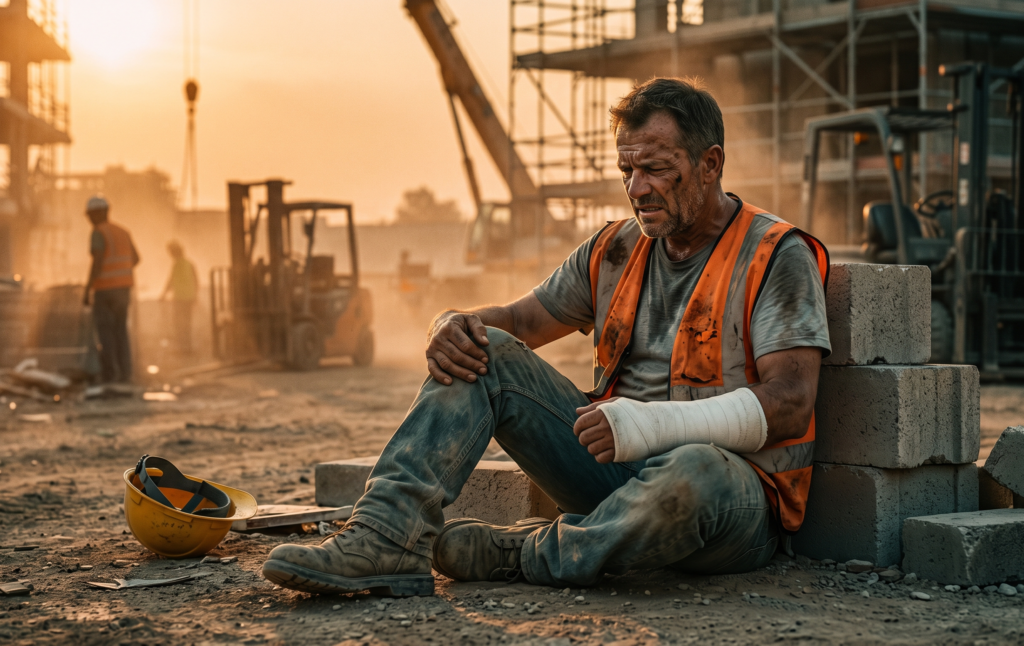
    A trench collapse is one of the few construction accidents that can turn fatal in seconds. A single cubic yard of soil weighs as much as a small car, and when a wall gives way, it does not bury a worker gradually — it crushes the chest and traps the body before anyone can react. For those who survive, the injuries are often severe: crushed limbs, spinal damage, internal trauma, and long recoveries that drain both savings and hope.

    What many injured workers are never told is that trench collapses are rarely true accidents. They are almost always the result of a known, preventable safety failure — and that distinction can dramatically change what a recovery looks like.

    Why a Trench Collapse Is Almost Never “Just an Accident”

    Excavation safety is not a gray area. The hazards of unprotected trenches have been understood for decades, and the rules meant to prevent collapses are among the most specific in all of construction. When a wall caves in, it generally means a required protection was missing — not that fate intervened.

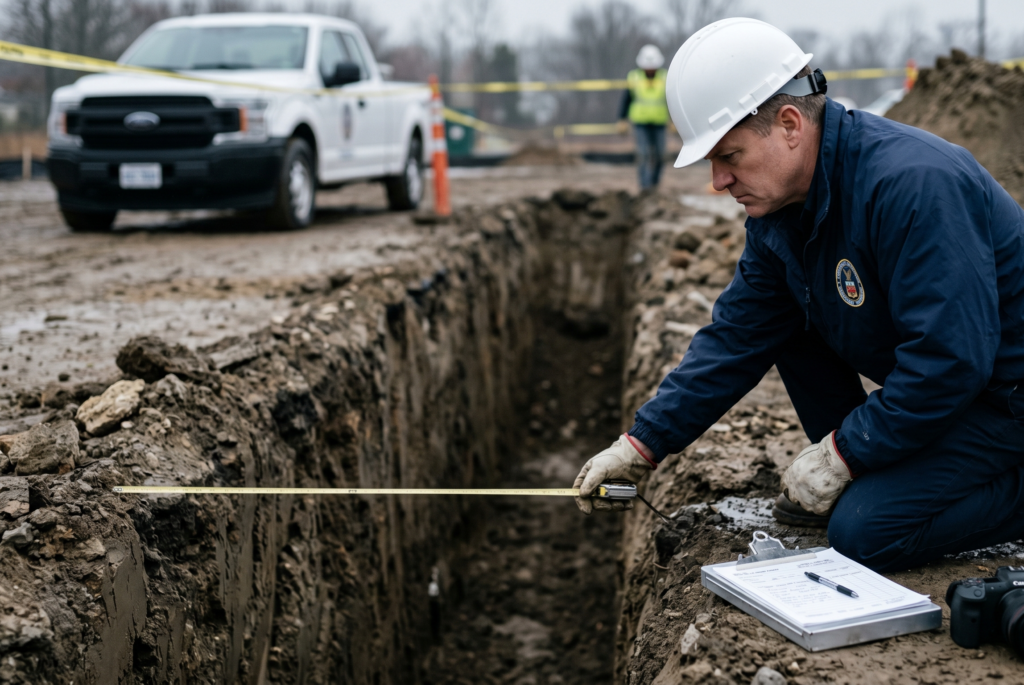
    Federal standards generally require a protective system in any trench five feet deep or greater, and they require that a “competent person” inspect the excavation before workers enter and after any change in conditions, such as rain or vibration. When those steps are skipped to save time or money, the collapse that follows is the predictable result of a choice.

    The point most workers miss: A trench collapse usually points to a documented safety violation. That violation does not just explain the accident — it can become the single most powerful piece of evidence in pursuing full compensation.

    The OSHA Standards That Should Have Protected You

    Excavation safety generally rests on three recognized methods of protecting workers from a cave-in. Standard guidelines suggest that at least one of these must be in place once a trench reaches the regulated depth:

    • Sloping or benching — cutting the trench walls back at an angle so the soil cannot shear off and fall inward.
    • Shoring — installing hydraulic or timber supports that brace the walls and hold them in place.
    • Shielding — placing a protective “trench box” around workers so a collapse cannot reach them.

    Alongside protection systems, the standards address safe access, spoil pile placement (keeping excavated dirt back from the edge), and daily inspections. You can review the official federal excavation and trenching requirements directly through the U.S. Occupational Safety and Health Administration (OSHA), which publishes the standards responsible contractors are expected to follow.

    Common Trench HazardWhat the Standard Generally Expects
    Trench 5 ft or deeper, no protectionSloping, shoring, or a trench box required
    No safe way in or outLadder or ramp within 25 ft of workers
    Dirt piled at the trench edgeSpoil kept back at least 2 ft from the edge
    No inspection after rainCompetent person re-inspects before re-entry
    Standing water in the trenchSpecial precautions or removal before entry

    How an OSHA Violation Strengthens Your Claim

    Workers’ compensation is a no-fault system, which means you generally do not have to prove anyone was negligent to receive benefits. So why does an OSHA violation matter so much? Because a serious trench collapse often involves more than one path to recovery, and a documented violation can shape both.

    On most excavation sites, your direct employer is only one of several companies present. A trench may involve a general contractor, an excavation subcontractor, an engineering firm, or an equipment supplier. When a company other than your employer contributed to the cave-in, a separate claim — often called a third-party claim — may exist outside the comp system. Unlike comp, that claim is based on fault, and a clear safety violation is exactly the kind of fault it turns on.

    Insurer tactic to watch for: After a collapse, the trench is often backfilled and repaired within days, sometimes before any independent measurement of its depth or soil type is taken. Once the trench is gone, proving how it failed becomes far harder. Attorneys often emphasize how decisive those first days can be for preserving the evidence.

    What Maximum Compensation Can Actually Include

    For a catastrophic injury, the difference between standard comp benefits and full compensation can be enormous. Workers’ comp generally covers medical treatment and a portion of lost wages, but it typically does not pay for the full human cost of being crushed in a trench. Standard guidelines suggest that a complete recovery picture may involve several layers:

    1. Medical coverage for emergency care, surgeries, rehabilitation, and future treatment related to the injury.
    2. Wage replacement while you are unable to work, though comp usually pays only a percentage of your lost earnings.
    3. Permanent disability benefits when a trench injury causes lasting impairment.
    4. Third-party damages, which may reach full lost earnings and pain and suffering when a separate company’s negligence is shown.

    Because these layers interact, the value comp leaves on the table is often exactly what a third-party claim is built to recover. For a broader walkthrough of how a construction injury moves from the first report to a full resolution, our complete workers’ compensation guide explains each stage in plain language.

    Deadlines and State Rules That Change Everything

    This is where strong claims quietly disappear. A workers’ comp claim and a third-party negligence claim run on completely different clocks. The deadline to report a comp injury may be measured in days, while the deadline to file a negligence claim — the statute of limitations — is generally measured in years, but varies dramatically from one state to the next.

    State laws vary significantly. Reporting windows, statutes of limitations, and the rules on shared fault all change from state to state. In some states, any fault assigned to the worker can reduce recovery; in others, the rules are far more forgiving. Standard guidelines suggest confirming the specific deadlines that apply where the injury occurred, because a missed window generally cannot be reopened.

    There is also the matter of the comp “lien.” When a third-party claim succeeds, the workers’ comp insurer that already paid benefits may be entitled to repayment from that recovery. How this affects your net result is highly state-specific, which is one reason these claims are usually evaluated together rather than separately.

    Remember: A trench collapse can open two doors, not one. Workers’ comp addresses the immediate medical and wage support, while a third-party claim may address everything comp leaves behind. The safety violation that caused the cave-in often sits at the center of both, and state laws vary significantly.

    See What Your Claim May Truly Be Worth

    A trench collapse can leave you facing surgeries, lost income, and a recovery that comp checks barely touch — while the possibility of a larger claim built on a clear OSHA violation goes completely unexamined. Before you assume workers’ comp is the end of the story, it helps to understand the potential value and direction of your situation. Try the free, anonymous Benefits Estimator at HardHat Rights to get a clearer picture in minutes, with no names and no pressure. Start your free Benefits Estimator here and find out what your next step could look like.

  • Scaffolding Falls: Determining Liability Beyond Standard Workers’ Comp


    Scaffolding Falls: Determining Liability Beyond Standard Workers’ Comp

    A fall from scaffolding is rarely a simple accident. For a construction worker, it can mean months of surgery, lost income, and a recovery that never quite reaches one hundred percent. Most injured workers are told the same thing in the first week: “File your workers’ comp claim, and that’s that.” What many are never told is that a scaffolding fall is one of the few construction injuries where a second, far larger source of recovery may exist alongside workers’ compensation.

    Understanding the difference between these two paths is not a technicality. It can be the difference between covering your medical bills and recovering for the full scope of what the injury actually cost you.

    Why Workers’ Comp Alone Often Falls Short

    Workers’ compensation is designed as a trade-off. In exchange for guaranteed benefits regardless of fault, the system generally limits what an injured worker can recover from their direct employer. In most states, comp benefits cover medical treatment and a portion of lost wages, but they typically do not pay for full lost earnings, pain and suffering, or the long-term human cost of a serious fall.

    For a minor injury, that trade-off can be reasonable. For a multi-story scaffolding fall involving spinal damage, traumatic brain injury, or permanent disability, the gap between what comp pays and what the injury truly costs can be enormous.

    The point most workers miss: Workers’ comp generally bars you from suing your own employer. It does not automatically bar a claim against a different company whose negligence contributed to the fall. That distinction is the entire foundation of third-party liability.

    The Concept of Third-Party Liability

    On a typical construction site, your employer is only one of many companies present. A scaffolding fall may involve a general contractor, a scaffold rental company, an equipment manufacturer, a property owner, or an entirely separate subcontractor. When the negligence of one of these third parties contributes to a fall, a separate legal claim may exist that lives outside the workers’ comp system.

    Unlike a comp claim, a third-party claim is generally based on fault and can seek the full range of damages. Attorneys often describe these two paths as running on parallel tracks: one provides immediate, no-fault benefits, while the other pursues the broader losses comp leaves behind.

    FactorWorkers’ Comp ClaimThird-Party Liability Claim
    Who it targetsYour direct employer’s insurerA separate at-fault company
    Fault requiredNo — benefits are no-faultYes — negligence must be shown
    Lost wagesUsually a partial percentagePotentially full lost earnings
    Pain and sufferingGenerally not availableOften recoverable
    Typical timelineBenefits begin relatively quicklyLonger, litigation-driven process

    Who May Share Liability in a Scaffolding Fall

    Determining liability beyond comp begins with mapping every party whose decisions touched the scaffold. Standard guidelines suggest that responsibility for scaffold safety is frequently shared across multiple companies, not concentrated in one. Parties that often come under review include:

    • The general contractor, which generally holds broad responsibility for overall site safety and coordination.
    • The scaffold erection or rental company, if the structure was assembled, inspected, or maintained improperly.
    • The equipment manufacturer, when a defective plank, coupler, guardrail, or component fails under normal use.
    • The property owner, in certain situations involving known hazards or unsafe premises.
    • Another subcontractor, whose crew created a dangerous condition near or on the scaffold.

    The Role of Safety Standards in Proving Negligence

    Liability claims rarely turn on opinion alone. They are often built on whether a recognized safety standard was violated. Scaffolding is one of the most heavily regulated areas of construction precisely because falls from height are so often catastrophic, and federal standards set clear expectations for guardrails, planking, capacity, and inspection.

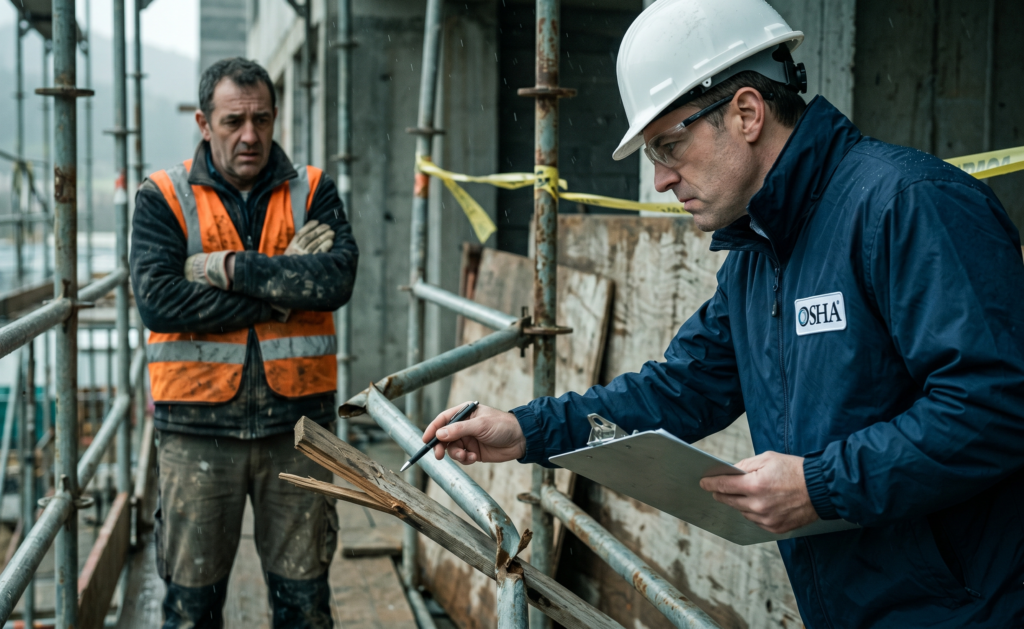
    When a scaffold lacked required fall protection, was overloaded, or was never properly inspected, that violation can become powerful evidence of negligence in a third-party claim. You can review the official federal scaffolding requirements directly through the U.S. Occupational Safety and Health Administration (OSHA), which publishes the standards that responsible contractors are expected to follow.

    Insurer tactic to watch for: After a serious fall, insurers and contractors sometimes move quickly to repair, dismantle, or “clean up” the scaffold before the condition is documented. Once that evidence is gone, proving how the structure failed becomes far harder. Attorneys often emphasize how decisive those first days can be.

    How Deadlines and State Rules Change Everything

    This is where many strong claims quietly die. A workers’ comp claim and a third-party lawsuit are governed by completely different clocks. The deadline to report a comp injury may be measured in days, while the deadline to file a third-party negligence claim — known as the statute of limitations — is generally measured in years, but varies dramatically from state to state.

    State laws vary significantly. The time limits, the rules on shared fault, and even which parties can be sued change from one state to the next. In some states, a portion of fault assigned to the worker can reduce or eliminate recovery; in others, the rules are far more forgiving. Standard guidelines suggest confirming the specific deadlines that apply where the injury occurred, because a missed window generally cannot be reopened.

    There is also the matter of the comp “lien.” When a third-party claim succeeds, the workers’ comp insurer that already paid benefits may be entitled to repayment from that recovery. How this interacts with your net result is highly state-specific and is one reason these two claims are usually evaluated together rather than separately.

    Approaches Injured Workers Commonly Consider

    While nothing here is legal or medical advice, the following reflects how serious scaffolding falls are generally navigated. Attorneys often recommend treating documentation as the foundation of both claims:

    1. Preserving the scene. Photographs of the scaffold, the failure point, and the surrounding area are often the most valuable evidence, especially before anything is repaired.
    2. Identifying every company on site. Because liability is frequently shared, knowing which firms were present helps reveal whether a third-party claim exists at all.
    3. Keeping the two claims aligned. Statements made in a comp claim can affect a third-party case, so consistency across both is generally considered important.
    4. Acting within the deadlines. Because the clocks differ and state rules vary, understanding local time limits early is widely regarded as essential.

    For a broader walkthrough of how a construction injury moves from the first report to a full resolution, our complete workers’ compensation guide explains each stage in plain language.

    Remember: A scaffolding fall can open two doors, not one. Workers’ comp addresses the immediate medical and wage support, while a third-party claim may address everything comp leaves on the table. State laws vary significantly, and the specifics of your jobsite always matter.

    See What Your Claim May Truly Be Worth

    A scaffolding fall can leave you facing mounting bills while a comp check covers only a fraction of what you lost — and the possibility of a larger third-party claim often goes completely unexamined. Before you assume workers’ comp is the end of the story, it helps to understand the potential value and direction of your situation. Try the free, anonymous Benefits Estimator at HardHat Rights to get a clearer picture in minutes, with no names and no pressure. Start your free Benefits Estimator here and find out what your next step could look like.