Who Pays the Medical Bills While You Wait for Claim Approval?
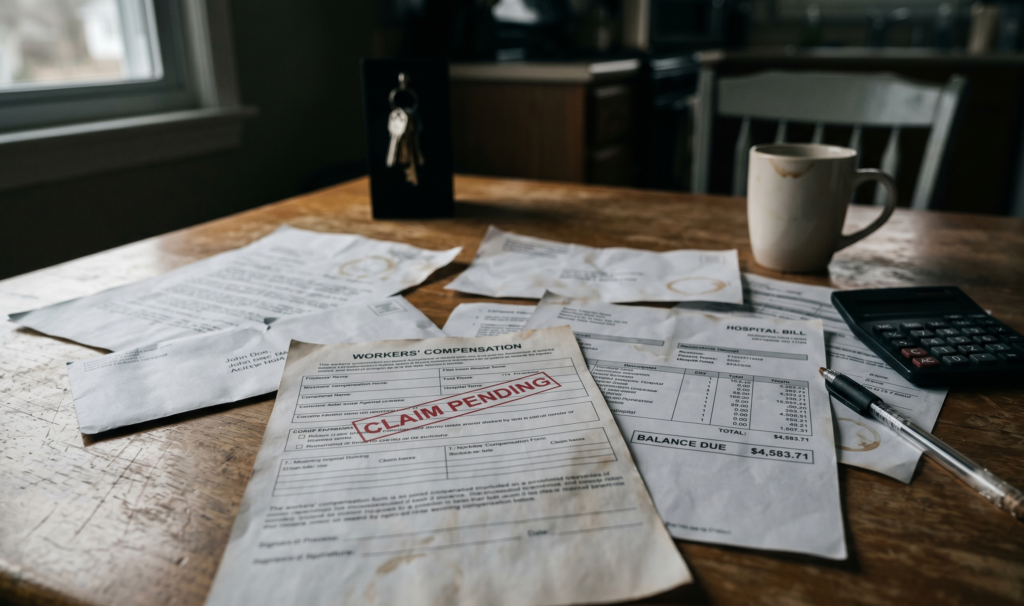
You got hurt on the jobsite, you reported it, and now you are stuck in the worst kind of limbo: the surgery, the physical therapy, or the specialist visit you need is sitting in a “pending” status while the bills keep arriving. For an injured construction worker, this gap is one of the most frightening parts of the entire process. The treatment cannot wait, but the approval has not come through, and no one will give you a straight answer about who is actually responsible for the cost right now.
Here is the part that few workers are told up front: in most workers’ compensation systems, an unapproved claim does not mean the bills automatically become your personal debt. Where those costs land while you wait depends heavily on the status of your claim and the rules of your state.

The Three Stages That Decide Who Pays
To understand who is on the hook for a bill, it helps to know which of three stages your claim is in. Each stage changes the answer dramatically.
- Reported but not yet accepted. The claim exists in the system, but the insurer has not formally approved or denied it. This is the true “waiting” zone, and it is where most confusion lives.
- Formally accepted. Once a claim is accepted, the insurer is generally responsible for authorized, related medical treatment, often with no copay or deductible to the worker.
- Formally denied. A written denial shifts the picture entirely and usually starts strict appeal deadlines. This is a different situation from simply waiting.
Key distinction: “Pending” is not the same as “denied.” A pending claim has not rejected your treatment, it simply has not approved it yet. Treating a delay as if it were a final no is one of the most common and costly mistakes injured workers make.
So Who Actually Pays During the Wait?
While a claim is pending, the bill does not vanish, but it also should not quietly default to you. Generally, in many states, one of a few things happens to that cost while the decision is in process:
| Who May Cover It | How It Typically Works | What to Watch For |
|---|---|---|
| Workers’ comp insurer | Some states require the insurer to pay for treatment during an investigation window, even before final acceptance. | This often applies only to authorized or emergency care. |
| The medical provider (on hold) | Many clinics will hold the bill, marking it pending against the comp claim rather than billing you. | Providers sometimes bill the patient by mistake when the claim stalls. |
| Your private health insurance | In some situations a group health plan pays first and later seeks reimbursement once comp is settled. | Plans may refuse or demand repayment, so the rules matter. |
| You, out of pocket | This is the outcome workers fear most, and it is often avoidable with the right paper trail. | Paying a comp-related bill yourself can complicate reimbursement later. |
The single most important factor is making sure every provider knows this is a work injury tied to an open workers’ compensation claim. When a clinic has your claim number and the insurer’s information, the bill is far more likely to be routed to the right place instead of to your mailbox.
Insurer tactic to watch for: A stalled claim can quietly push bills toward you, and a worker who starts paying out of pocket may feel pressured to accept a fast, low settlement just to stop the bleeding. Attorneys often describe this financial squeeze as a strategy, not an accident.
Why Bills End Up With the Wrong Person
When a comp-related bill lands on your personal account, it is usually the result of a breakdown in communication rather than a final ruling that you owe the money. Standard guidelines suggest these are the most frequent causes:
- The provider was never told it was a work injury. Without a claim number on file, the billing department defaults to your name and insurance.
- The claim number was missing or wrong. A single typo can send a bill into the personal-collections track instead of the comp track.
- The insurer is investigating. During an open investigation, some bills sit unpaid until a decision is reached.
- A collection notice arrived automatically. Automated billing cycles often generate notices that do not reflect the actual status of your comp claim.
A collection letter during a pending claim is alarming, but it is frequently a billing-system reflex rather than a verdict on who is responsible. Attorneys often recommend documenting every notice in writing and confirming the claim status before assuming the debt is truly yours.
Approaches Injured Workers Commonly Consider
Nothing here is legal or medical advice, but the following reflects how a pending-bill situation is generally navigated. The common thread is documentation and keeping the cost attached to the claim, not to you.
- Keep every bill and notice. A written record of what arrived and when can later show that bills were mishandled during the wait.
- Confirm providers have the claim number. Generally, in many states, a bill marked against an open comp claim is handled very differently from a personal balance.
- Note the difference between pending and denied. Standard guidelines suggest treating a written denial as urgent, while a pending status is often something that can still be moved forward.
- Understand your state’s rules. Some states require treatment to be covered during the investigation period, while others do not, so the local rules drive everything.
Deadlines matter. State laws vary significantly regarding whether an insurer must pay for treatment before a claim is accepted, how long an investigation can last, and how quickly a denial must be disputed. In some states these windows are measured in days. Missing one can cause more lasting harm than the wait itself.
While these benefit timelines are set by each state rather than by federal law, official resources help establish how a work injury should be reported and protected from the start. You can review worker protections directly at the U.S. Occupational Safety and Health Administration (OSHA).
For a step-by-step walkthrough of how a construction claim moves from the day of injury all the way to resolution, our complete workers’ compensation guide explains each stage in plain language.
Remember: A pending claim is not a bill you have automatically inherited. Keeping every cost tied to your open claim is one of the strongest forms of protection while you wait. State laws vary significantly, and the details of your specific situation always matter.
See Where Your Claim Really Stands
Watching bills pile up while your claim sits in “pending” is exhausting, and the uncertainty alone can push workers into decisions they later regret. Before you assume those costs are yours to carry, it helps to understand the potential value and direction of your claim. Try the free, anonymous Benefits Estimator at HardHat Rights to get a clearer picture of your situation in minutes, with no names and no pressure. Start your free Benefits Estimator here and take the guesswork out of what comes next.
Disclaimer: This website is for informational purposes only and does not constitute legal or medical advice. The content provided is not intended to be a substitute for professional medical advice, diagnosis, or treatment. Benefit estimates are approximations based on standard state formulas and do not account for your state’s specific caps or your individual circumstances. Always consult a licensed workers’ compensation attorney in your state for legal advice, and a qualified health provider regarding any medical conditions or treatment.