Category: Your Job & Your Rights

  • Union vs. Non-Union Construction Injuries: How the Process Differs


    Union vs. Non-Union Construction Injuries: How the Process Differs

    When you get hurt on a construction site, one factor quietly shapes almost everything that happens next: whether you work under a union contract or not. Two workers can suffer the exact same fall from the exact same scaffold, yet face very different roads to medical care, lost wages, and a fair outcome. Understanding which road you are on can change how prepared you feel from day one.

    The core of workers’ compensation is the same for everyone. Generally, in most states, it is a no-fault system that covers medical treatment and a portion of lost wages regardless of who caused the accident. But the support around that core, the paperwork, the advocates, and the deadlines, can look dramatically different depending on your union status.

    What Stays the Same No Matter Where You Work

    Before the differences, it helps to see the common ground. Workers’ compensation is a state-run system, and the basic protections it offers do not vanish because a job is non-union. Standard guidelines suggest that in most states, every covered construction worker is generally entitled to:

    • Medical treatment for the work-related injury, often with no out-of-pocket cost to the worker.
    • Wage replacement benefits, usually a percentage of average weekly earnings, while unable to work.
    • Disability benefits if the injury leads to a lasting impairment.
    • Protection from retaliation for filing a legitimate claim in many states.

    In other words, the right to file a claim does not depend on a union card. What often differs is the environment in which that claim moves forward, and how much help stands behind the injured worker.

    The system is the same; the support is not. Non-union workers have the very same legal right to benefits. The real gap is usually in the resources and advocacy available while the claim is being handled.

    The Union Process: Built-In Structure and Advocates

    On a union job, an injured worker is rarely navigating the system alone. The collective bargaining agreement, the contract between the union and the employer, often layers extra structure on top of the state’s workers’ compensation rules. Attorneys often note that this added structure is one of the clearest practical differences.

    Common features of the union process generally include:

    • A shop steward or business agent who can help report the injury and push back if the employer drags its feet.
    • A grievance procedure that may address disputes the workers’ compensation system itself does not cover, such as wrongful discipline tied to an injury.
    • Supplemental benefits negotiated in the contract, which can sometimes sit on top of standard state benefits.
    • Clearer return-to-work rules spelled out in the agreement rather than left to the employer’s discretion.

    It is important to be precise here. A union does not replace the state workers’ compensation system, and the grievance process is generally separate from a comp claim. Instead, the union often acts as an extra layer of advocacy and information that a non-union worker has to assemble on their own.

    Watch this trap: Even on a union job, the workers’ compensation deadlines set by the state still apply. Relying only on a steward to “handle it” without confirming that the formal claim was actually filed on time is a mistake injured workers sometimes make.

    The Non-Union Process: Same Rights, Less Built-In Backup

    For non-union workers, the legal entitlement to benefits is identical, but the safety net of advocates is usually missing. There is often no steward to call, no grievance procedure, and no contract spelling out return-to-work terms. The worker typically deals directly with the employer and the insurance company.

    This is where the experience can become more isolating. Standard guidelines suggest that without an internal advocate, non-union workers more often encounter:

    • Direct pressure from the insurer, including early phone calls and requests for recorded statements.
    • Confusion about deadlines, with no one inside the company reminding them of filing windows.
    • Informal “off the books” suggestions to handle the injury quietly instead of through a formal claim.
    • Uncertainty about doctor choice, which varies heavily by state.

    None of this changes the worker’s underlying rights. It simply means the responsibility for protecting those rights falls more squarely on the individual, which is why understanding the process in advance matters so much.

    Side-by-Side: How the Two Processes Generally Compare

    The table below outlines tendencies, not guarantees. Every situation is different, and a well-informed non-union worker can be just as protected as a union member who assumes the system will take care of itself.

    FactorUnion Worker (Typical)Non-Union Worker (Typical)
    Right to file a claimYesYes (identical)
    Built-in advocateShop steward or business agentNone by default
    Dispute resolutionGrievance procedure plus comp systemComp system only
    Supplemental benefitsSometimes negotiated in contractState minimums apply
    Return-to-work termsOften defined in the agreementLargely employer discretion

    State laws vary significantly regarding deadlines, doctor choice, and benefit amounts. A union contract cannot override the state’s filing windows, and two non-union workers in different states may face very different rules. Assuming the process matches what a coworker experienced elsewhere is a frequent and costly error.

    Why Safety Standards Apply to Everyone Equally

    One area where there is no difference at all is workplace safety law. Federal safety standards protect union and non-union workers alike. Employers are generally required to provide a safe site, proper training, and the right equipment regardless of how the crew is organized.

    If unsafe conditions contributed to an injury, that record can matter no matter your union status. You can review official worker safety rights and how to report hazards directly from the Occupational Safety and Health Administration (OSHA).

    Steps Injured Workers Commonly Consider in Both Cases

    While nothing here is legal or medical advice, the following reflects how the process is generally navigated, whether the job is union or not. Attorneys often recommend focusing on documentation and deadlines, since those protect a claim regardless of the work environment:

    1. Reporting the injury promptly in writing, since many states impose strict notice deadlines.
    2. Confirming the formal claim was filed, not just that someone “knows” about the injury.
    3. Keeping personal records of dates, treatment, and conversations with the insurer.
    4. Understanding state-specific doctor rules, which differ widely and affect who controls treatment.
    5. Knowing union resources, if available, such as a steward who can help track the process.

    For a step-by-step walkthrough of how a construction claim moves from injury to resolution, our complete workers’ compensation guide explains each stage in plain language for union and non-union workers alike.

    Remember: Union status changes the support around your claim, not the existence of your rights. Whether you carry a union card or not, the same core protections generally apply, and the same deadlines still control your case. State laws vary significantly, and the details of your situation always matter.

    See What Your Claim May Be Worth, Union or Not

    Wondering whether your union status changes what you are owed can add stress to an already overwhelming time. Before you assume the process is stacked against you, it helps to understand the potential value and direction of your claim. Try the free, anonymous Benefits Estimator at HardHat Rights to get a clearer picture in minutes, with no names and no pressure. Start your free Benefits Estimator here and take the guesswork out of what comes next.


  • Do You Always Need a Lawyer for a Workers’ Comp Claim?


    Do You Always Need a Lawyer for a Workers’ Comp Claim?

    It is one of the first questions almost every injured construction worker asks: “Do I really need a lawyer for this?” The honest answer is that it depends on the claim. Some workers’ compensation cases are straightforward enough to handle alone. Others quietly turn into a fight you never agreed to, against an insurance company with a full legal team and a financial reason to pay you as little as possible.

    Knowing the difference early can protect both your health and your wallet. This guide breaks down when self-filing tends to work, and the warning signs that generally mean professional help is worth a serious look.

    When You May Not Need a Lawyer

    Not every claim requires an attorney. In simpler situations, the system is designed to function without one, and hiring counsel may not change the outcome much. A claim generally falls into the “manageable alone” category when all of the following are true:

    • The injury is clearly work-related and witnessed or well documented.
    • The injury is minor, with a short, predictable recovery.
    • You missed little or no work, so lost-wage benefits are small or not in dispute.
    • The employer and insurer have accepted the claim without pushback.
    • There is no argument over a pre-existing condition.

    When those boxes are checked, the paperwork is usually the main hurdle. Reporting the injury on time and following the medical instructions tends to be enough to keep benefits flowing.

    A quiet trade-off to understand: In most states, workers’ compensation attorneys are paid a contingency fee taken from your benefits, not billed by the hour. On a small, uncontested claim, that fee may not be worth it. On a disputed or serious claim, it often pays for itself many times over.

    Red Flags That Usually Mean You Should Talk to a Lawyer

    The picture changes the moment the insurer starts looking for reasons to limit what they pay. Standard guidelines suggest that a free consultation becomes worth considering as soon as any of these signals appear:

    1. Your claim was denied or benefits were suddenly stopped.
    2. The insurer blames a pre-existing condition for your injury.
    3. You are pressured to give a recorded statement or sign documents quickly.
    4. Your injury is serious, permanent, or requires surgery.
    5. A doctor says you have reached maximum medical improvement but you still cannot work.
    6. You are sent to an independent medical exam that contradicts your treating doctor.
    7. You were fired, demoted, or harassed after reporting the injury.
    8. The settlement offer feels low or arrives suspiciously fast.

    Insurer tactic to watch for: A fast, friendly settlement offer early in a claim is rarely generous. It is frequently calculated to close the file before the full cost of future medical care and lost earnings is known. Once signed, that door usually cannot be reopened.

    Self-Filing vs. Hiring an Attorney: A Quick Comparison

    Every case is different, but this simplified comparison shows how the two paths generally stack up against the factors that matter most:

    FactorSelf-FilingHiring an Attorney
    Best forMinor, accepted claimsDisputed or serious claims
    Upfront costNoneNone (contingency fee)
    Handles denials & appealsOn your ownBuilt into the service
    Settlement negotiationYou vs. insurer’s teamProfessional advocate
    Risk of underpaymentHigherLower

    What a Free Consultation Actually Does

    One of the biggest misunderstandings is that calling a lawyer commits you to hiring one. It generally does not. Most workers’ compensation attorneys review these cases at no upfront cost, and the goal of that first conversation is simply to find out whether your claim is being handled fairly.

    A consultation typically helps clarify a few things:

    • Whether the benefits you are receiving match what the injury should support.
    • Whether any deadlines are approaching that could threaten the claim.
    • Whether the insurer’s position has any real legal weight behind it.

    It also helps to understand the safety obligations behind your injury in the first place. The federal standards employers must follow are published openly by OSHA, which outlines the rights every worker has to a safe job site.

    For a full walkthrough of how a construction claim moves from injury to resolution, our complete workers’ compensation guide explains each stage in plain language.

    Remember: State laws vary significantly regarding deadlines, attorney fees, and how settlements are approved. What is true in one state may not apply in yours, so the specific rules where your injury happened always control the outcome.

    See What Your Claim May Be Worth Before You Decide

    The smartest move before choosing whether to hire a lawyer is knowing where your claim actually stands. When you understand the potential value and direction of your case, the decision becomes far less stressful. Try the free, anonymous Benefits Estimator at HardHat Rights to get a clearer picture in minutes, with no names and no pressure. Start your free Benefits Estimator here and decide your next step with confidence.

  • Statute of Limitations: The Absolute Final Deadlines to File Your Claim


    Statute of Limitations: The Absolute Final Deadlines to File Your Claim

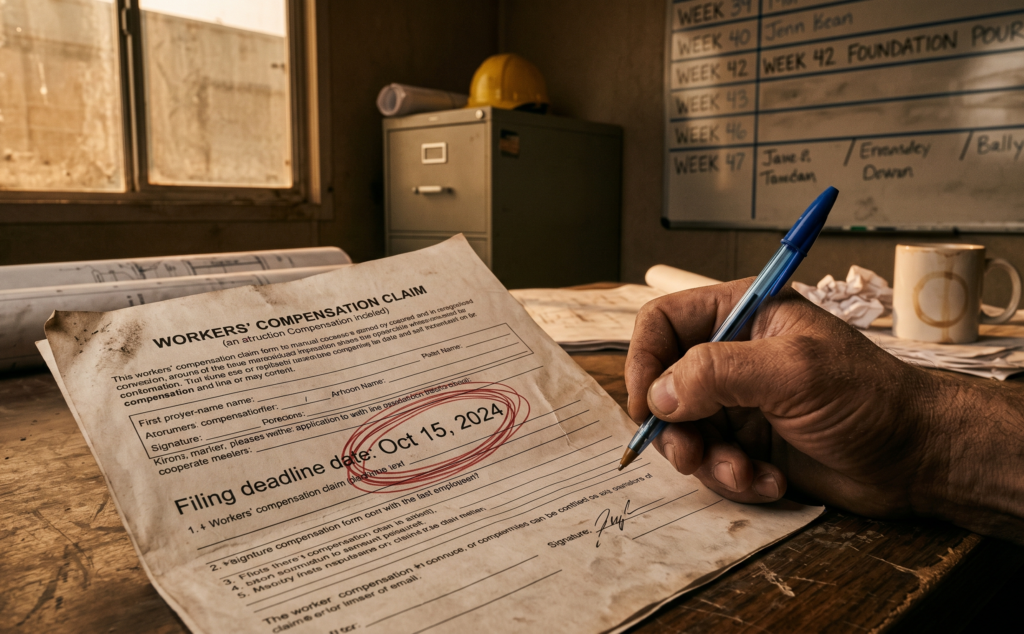
    There is one mistake in a workers’ compensation case that almost nothing can fix: missing the deadline to file. You can have a serious injury, honest witnesses, and a clear connection to the job, and still walk away with nothing simply because the clock ran out. This hard cutoff is called the statute of limitations, and for injured construction workers it is one of the most unforgiving rules in the entire system.

    What makes it so dangerous is how quietly it works. No one calls to remind you. The insurance company is under no obligation to warn you that your time is running short. By the time many workers realize a deadline existed, it has often already passed.


    What a Statute of Limitations Actually Is

    A statute of limitations is a legal time limit. It sets the maximum window in which a claim can be filed after an injury occurs. Once that window closes, the right to pursue benefits is generally permanently lost, no matter how strong the underlying case may have been.

    Generally, in many states, a workers’ compensation statute of limitations runs somewhere between one and three years from the date of injury. That range sounds generous, but it shrinks quickly once you factor in medical treatment, time off work, and the stress of recovery. Standard guidelines suggest the safest assumption is that your window is shorter than you think.

    The deadline does not pause because you are still healing. In most systems the clock keeps running while you recover, while you wait on the insurer, and while you decide what to do. Time spent waiting is rarely time the law gives back.

    Two Different Clocks: Notice vs. Filing

    One of the most common and costly misunderstandings is treating the case as if there is only one deadline. In reality, there are usually two separate clocks, and missing either one can be fatal to a claim.

    • The notice deadline. This is the short window to report the injury to your employer, often measured in days. Many states require notice within roughly 30 days, and some are even stricter.
    • The filing deadline. This is the longer window to formally file a claim with the state workers’ compensation board or commission, often measured in years.

    Reporting the injury to a supervisor is not the same as filing an official claim. Attorneys often note that workers who told their foreman right away still lost their cases later, because verbal notice on the jobsite was never converted into a formal filing with the state.

    When the Clock Actually Starts

    For a sudden accident, the start date is usually obvious: the day you fell, the day the machine caught your hand, the day the load came down. But construction injuries are not always sudden, and that is where the timeline gets complicated.

    Standard guidelines suggest the starting point can shift depending on the type of injury:

    Type of InjuryWhen the Clock Often Starts
    Sudden accident (fall, crush, fracture)The date of the accident itself.
    Repetitive strain (back, knees, shoulders)The date you knew, or reasonably should have known, the condition was work-related.
    Occupational illness (toxic or dust exposure)Often the date of diagnosis or first medical link to the job.
    Death benefits for a familyFrequently a separate deadline running from the date of death, not the original injury.

    This concept is sometimes called the “discovery rule.” For slow-developing injuries common in the trades, the clock may not begin until the connection between the work and the harm becomes clear. But relying on a later start date is risky, because how that rule applies varies widely.

    Watch this insurer tactic: When a claim is reported late, adjusters frequently argue that you “knew or should have known” about the injury much earlier than you say. Pushing the start date backward is a common way to claim the deadline already expired.

    Why State Laws Make This So Dangerous

    There is no single national deadline for workers’ compensation, and the differences between states are dramatic. The exact same injury that leaves years to file in one state might leave only a fraction of that time in the state next door.

    State laws vary significantly regarding specific deadlines. The notice period, the filing period, and the rules for when each clock starts can all differ. Assuming your state matches a neighboring one, or matches advice you read online for a different state, is a frequent and unrecoverable mistake.

    Because these rules are set at the state level and the stakes are absolute, this is one area where general information is no substitute for confirming the exact deadlines that apply where the injury happened. The U.S. Department of Labor maintains an overview of state workers’ compensation systems and contacts through its Office of Workers’ Compensation Programs (OWCP), which can help point you to the right state authority.

    Events That Can Pause or Extend the Deadline

    The clock is not always rigid. In some situations, certain events can pause (“toll”) or restart a deadline. Standard guidelines suggest these factors sometimes matter, though their effect differs from state to state:

    1. Ongoing benefit payments. If the insurer has been paying medical bills or wage benefits, some states restart the filing clock from the date of the last payment.
    2. A minor or legally incapacitated worker. Deadlines are sometimes extended for injured workers who were under age or unable to act on their own behalf.
    3. Concealed or delayed injuries. The discovery rule may delay the start date for conditions that were not reasonably knowable at first.
    4. Employer misconduct. In limited cases, a deadline may be affected if an employer actively prevented a worker from filing.

    Attorneys often caution that these exceptions are narrow and heavily disputed. Treating a possible extension as a guarantee is exactly the kind of assumption that ends cases. For a full picture of how a claim moves from injury to resolution, our complete workers’ compensation guide walks through each stage in plain language.

    How Injured Workers Commonly Protect the Timeline

    While nothing here is legal advice, the following reflects how this situation is generally navigated. Standard guidelines suggest that acting early and keeping records are the strongest forms of protection against a deadline problem:

    • Treating the earliest possible date as the start. Assuming the clock began at the moment of injury, rather than betting on a later date, tends to be the safer footing.
    • Separating “telling the boss” from “filing the claim.” Verbal notice and a formal state filing are two different steps with two different deadlines.
    • Keeping a paper trail. Dates of injury, reports, medical visits, and any insurer payments all help establish where the timeline truly stands.
    • Confirming the exact state deadline. Because the numbers vary so widely, attorneys often recommend verifying the specific limits that apply rather than relying on a general figure.

    Remember: The statute of limitations rewards action and punishes delay. Unlike many parts of a claim, a missed deadline usually cannot be appealed, argued around, or undone. State laws vary significantly, and the details of your situation always matter.

    Find Out Where Your Claim Stands Before Time Runs Out

    Few things feel worse than wondering whether you waited too long. Instead of guessing in silence while the clock keeps moving, it helps to understand the potential value and direction of your claim right now. Try the free, anonymous Benefits Estimator at HardHat Rights to get a clearer picture in minutes, with no names and no pressure. Start your free Benefits Estimator here and take the guesswork out of what comes next.

  • Independent Contractor vs. Employee: The Misclassification Trap on Job Sites


    Independent Contractor vs. Employee: The Misclassification Trap on Job Sites

    You got hurt on the jobsite, you reach out about workers’ compensation, and then comes a sentence that stops you cold: “You’re a 1099 contractor, so you’re not covered.” In that moment it can feel like the door has been slammed shut before you ever got to ask a question. That single label, often decided long before your injury, can mean the difference between full medical coverage and being told you are on your own.

    Here is what frequently goes unexplained on the jobsite: the label on your paperwork is not always the final word. In many states, whether you are truly an “independent contractor” or actually an employee is decided by what the work looks like in reality, not by what a form says. This gap is the heart of what is known as the misclassification trap.

    Why the “1099 Contractor” Label Is Not the Final Answer

    The most misunderstood point is this: calling someone a contractor does not make them one. Generally, in many states, courts and workers’ compensation boards look past the paperwork and examine how the job was actually performed. A signed agreement that says “independent contractor” can carry far less weight than the day-to-day reality of the work.

    Standard guidelines suggest the analysis usually turns on one central idea: control. The more control a company has over how, when, and where you do your work, the more likely you are to be treated as an employee, regardless of the title on your check.

    The label is a starting point, not a verdict. Many injured workers walk away from a valid claim the moment they hear “you’re a contractor,” never realizing that the classification itself can be challenged based on the facts of the job.

    The Tests Used to Decide Who Is Really an Employee

    Different states apply different legal tests, but they tend to circle the same set of questions. Attorneys often note that no single factor decides the issue; instead, the whole picture is weighed together. Standard guidelines suggest these are the factors that commonly matter most:

    • Control over the work. Does the company set your hours, direct your tasks, and supervise how the job is done, or do you control the method yourself?
    • Tools and equipment. Does the company provide the materials, machinery, and safety gear, or do you bring your own?
    • Method of payment. Are you paid a regular wage by the hour or week, or per project as a separate business?
    • Permanence of the relationship. Do you work for one company continuously, or move between many clients?
    • Whether the work is part of the core business. A framer working full time for a framing company looks very different from a one-time specialty consultant.

    Many states use a version of the “ABC test” or a multi-factor “right to control” test. In an ABC-style analysis, a worker is often presumed to be an employee unless the company can prove all three of these points:

    1. (A) The worker is free from the company’s control and direction in performing the work.
    2. (B) The work is outside the usual course of the company’s business.
    3. (C) The worker is genuinely engaged in an independent trade or business of the same nature.

    Watch this trap: On a construction site, point (B) is often the company’s weakest link. If a roofing business classifies its roofers as contractors, the work is squarely inside the usual course of that business, which is exactly the kind of detail that can unravel a misclassification.

    How State Laws Differ on Misclassification

    There is no single national rule here, and the differences between states are dramatic. The exact same working arrangement can be treated as employment in one state and as legitimate contracting in another.

    ApproachWhat It Generally Means for You
    Strict ABC testYou are presumed an employee; the company must prove all three ABC factors to classify you otherwise.
    Right-to-control testThe board weighs many factors, with emphasis on how much the company directs the work.
    Construction-specific statutesSome states have special rules that presume construction workers are employees unless narrow conditions are met.
    Statutory employer rulesA general contractor may be responsible for an uninsured subcontractor’s injured workers.

    State laws vary significantly regarding classification standards and filing deadlines. Several states have passed tough construction-industry rules precisely because misclassification is so common in the trades. Assuming your state follows the same test as a neighboring one is a frequent and costly mistake.

    The “Statutory Employer” Safety Net Many Workers Miss

    Here is a protection that often goes unmentioned. In many states, if a subcontractor fails to carry workers’ compensation insurance, the general contractor above them can become the “statutory employer” responsible for the injured worker’s benefits. This rule exists to stop companies from dodging coverage by stacking layers of subcontractors.

    In practice, this means that even when your direct boss claims you are an uninsured contractor, the larger company running the site may still bear responsibility. Attorneys often examine the entire chain of contractors on a project, not just the name on your paycheck.

    Federal and state agencies treat misclassification as a serious issue, in part because it strips workers of safety and wage protections. You can review official guidance on worker classification and the difference between employees and contractors directly from the U.S. Department of Labor (DOL).

    Options Injured Workers Commonly Consider

    While nothing here is legal or medical advice, the following reflects how this situation is generally navigated. Standard guidelines suggest that documentation and a clear understanding of your state’s classification test are the strongest forms of protection:

    • Looking past the label first. Because classification depends on the reality of the work, the actual day-to-day facts generally matter more than the title on the form.
    • Preserving evidence of control. Text messages setting your schedule, instructions on how to do the job, and proof that the company supplied tools tend to matter most while they are still available.
    • Identifying every company on the site. Knowing the general contractor and other parties can reveal a statutory employer who may carry coverage.
    • Not assuming “1099” means “no benefits.” Attorneys often note that a contractor label is frequently the beginning of a dispute, not the end of one.

    For a step-by-step walkthrough of how a construction claim moves from injury to resolution, our complete workers’ compensation guide explains each stage in plain language.

    Remember: Being handed a 1099 raises a question; it does not always answer one. Whether you are truly a contractor or a misclassified employee depends on control, your state’s specific test, and the real structure of the job site. State laws vary significantly, and the details of your situation always matter.

    Find Out If You May Have Been Misclassified

    Being told you are “just a contractor” right after a serious injury can make the whole case feel hopeless, as if the paperwork already decided everything. Before you assume your options are gone, it helps to understand the potential value and direction of your claim. Try the free, anonymous Benefits Estimator at HardHat Rights to get a clearer picture in minutes, with no names and no pressure. Start your free Benefits Estimator here and take the guesswork out of what comes next.
  • How to Appeal a Denied Workers’ Compensation Claim (Step-by-Step)


    How to Appeal a Denied Workers’ Compensation Claim (Step-by-Step)

    Opening a letter that says your workers’ compensation claim has been denied can feel like the floor dropping out from under you. The bills do not stop, the pain does not stop, and suddenly the system you were counting on appears to have closed its door. Here is the part that often gets lost in the panic: a denial is frequently the beginning of the process, not the end of it.

    Many denials are reversed on appeal. Insurers know that a large share of injured construction workers will read the word “denied” and simply give up. Understanding how the appeal process generally works is the first step toward making sure you are not one of them.

    Why Workers’ Comp Claims Get Denied in the First Place

    A denial rarely means your injury was not real. More often it points to a technical or administrative reason the insurer can use to stop payments, at least temporarily. Common grounds include:

    • Missed deadlines for reporting the injury or filing the claim.
    • A dispute over whether the injury is genuinely work-related.
    • Claims of a pre-existing condition being the “real” cause.
    • Gaps or inconsistencies in the medical records.
    • An IME opinion that contradicts your treating doctor.
    • A failed or missing drug test after the accident.

    The denial letter itself is required, in most systems, to state a reason. That stated reason is important: it generally defines what the appeal will need to address.

    Insurer tactic to watch for: Some denials are written in dense, discouraging language that makes the decision sound final and unappealable. In reality, the same letter usually contains the deadline and instructions for challenging it, often buried near the bottom in small print.

    Step-by-Step: How the Appeal Process Generally Works

    Procedures differ from state to state, but the overall path tends to follow a recognizable sequence. Here is how the stages commonly unfold:

    1. Read the denial letter closely. The stated reason and the response deadline are the two most important pieces of information on the page.
    2. Note the deadline immediately. Appeal windows are often short, and they begin running from the date on the letter, not the date you read it.
    3. Gather supporting evidence. Updated medical records, the official accident report, and witness statements generally form the backbone of an appeal.
    4. File the formal appeal or hearing request. This is typically submitted to a state workers’ compensation board or industrial commission, not back to the insurer.
    5. Prepare for mediation or a hearing. Many states attempt an informal resolution before a formal hearing in front of a judge.
    6. Attend the hearing. A workers’ compensation judge reviews the evidence from both sides and issues a decision.
    7. Escalate if necessary. If the hearing does not go your way, further levels of appeal generally exist, all the way up to state appellate courts.

    Deadlines matter most of all. State laws vary significantly regarding how long you have to appeal a denial. In some states the window is as short as 14 to 30 days; in others it stretches longer. Missing this deadline can permanently close the claim, no matter how strong the underlying injury case is. Attorneys often recommend treating the denial date as a hard countdown.

    Appeal Levels at a Glance

    While the exact names change by state, most systems move through escalating stages. This simplified comparison shows the general progression:

    tageWhat HappensTypical Outcome
    Reconsideration / InformalInsurer or board reviews new evidenceQuick reversal or referral onward
    MediationNeutral third party guides settlement talksNegotiated resolution
    Formal HearingJudge weighs evidence and testimonyBinding written decision
    Board / Appellate ReviewHigher panel reviews the hearing recordFinal administrative ruling

    Building a Strong Appeal: What Tends to Make the Difference

    Nothing here is legal advice, but standard guidelines consistently point to the same theme: an appeal is won on documentation, not on emotion. The strongest appeals generally share a few features:

    • A clear medical link. Records that directly connect the injury to the workplace incident tend to carry the most weight.
    • Consistency across every document. Dates, descriptions, and symptoms that match from the first report onward protect credibility.
    • Independent corroboration. Witness statements and the official accident report help counter a “not work-related” denial.
    • Respect for every deadline. Even a perfect case can be lost on a missed filing date.

    Because the stakes are high and the rules are technical, attorneys often recommend a professional review of any denial before the appeal window closes. Most workers’ compensation attorneys evaluate these cases at no upfront cost.

    You can review your broader rights and an employer’s safety obligations directly through the U.S. Department of Labor, which outlines how workers’ compensation systems are structured.

    For a full walkthrough of how a construction claim moves from injury to resolution, our complete workers’ compensation guide explains each stage in plain language.

    Remember: A denial is a position the insurer is taking, not a final verdict on your injury. State laws vary significantly, and the specific deadlines and procedures in your state always control what happens next.

    See What Your Claim May Be Worth Before You Appeal

    A denial is designed to make you feel powerless, but knowing where you stand changes everything. Before you decide your next move, it helps to understand the potential value and direction of your claim. Try the free, anonymous Benefits Estimator at HardHat Rights to get a clearer picture in minutes, with no names and no pressure. Start your free Benefits Estimator here and take the guesswork out of your appeal.

  • Failed a Drug Test After a Construction Accident? Your Options Explained


    Failed a Drug Test After a Construction Accident? Your Options Explained

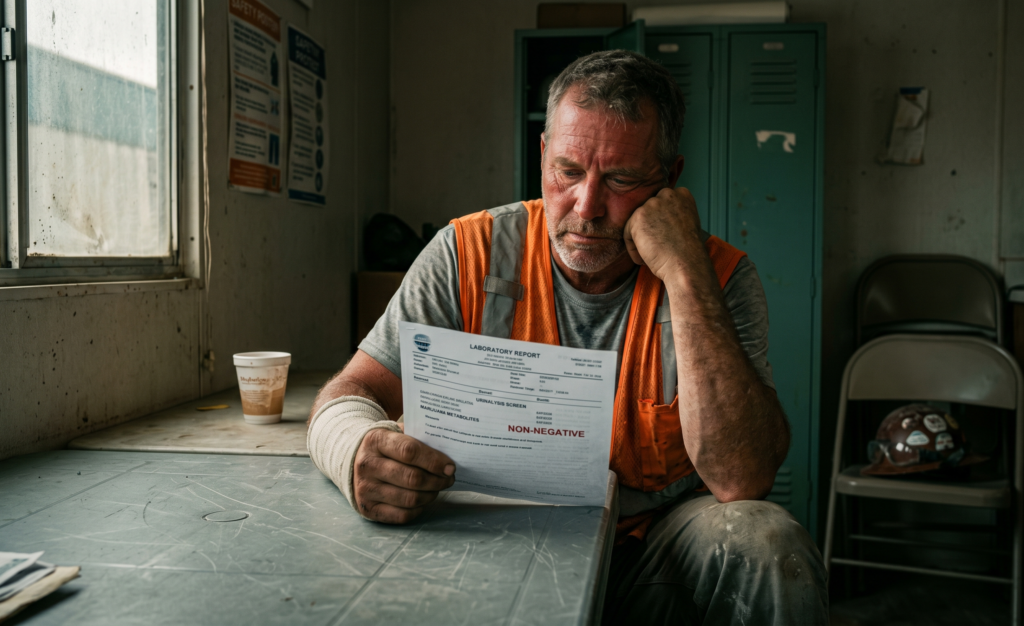
    You got hurt on the jobsite, and then came the second blow: a failed post-accident drug test. In that moment, it can feel like the claim is already over, like the company has all the proof it needs to walk away. That fear is exactly what many injured workers are left sitting with, and it is rarely the full picture.

    Here is what often goes unexplained on the jobsite: in many states, a positive drug test does not automatically destroy a workers’ compensation claim. The rules around intoxication, causation, and testing procedure are far more complicated than a simple pass-or-fail, and those details can decide whether benefits are denied or paid.

    Why a Failed Drug Test Does Not Automatically End Your Claim

    The single most misunderstood point is this: a positive test proves presence, not cause. Detecting a substance in your system is not the same as proving that the substance is what caused your accident. In many workers’ compensation systems, the distinction between those two things is everything.

    Generally, in many states, the insurer cannot deny a claim simply because a test came back positive. Instead, the law often requires the carrier to connect the substance to the injury itself. Standard guidelines suggest the analysis usually turns on one central question:

    Did intoxication actually cause the accident, or did it just happen to be detectable? A worker who tests positive for a substance from days earlier, but was struck by a falling load through no fault of their own, is in a very different position from someone whose impairment directly led to the incident.

    This is why the substance matters so much. Marijuana, for example, can remain detectable for weeks after use, long after any impairing effect has worn off. A positive THC result on Monday may say nothing at all about a worker’s condition during a Friday accident, and attorneys often raise exactly that point.

    The “Rebuttable Presumption” Trap

    This is where many workers get caught off guard. A number of states apply what is called a rebuttable presumption of intoxication. In plain terms, once you test positive above a certain threshold, the law may presume that drugs or alcohol caused your accident, and the burden shifts to you to prove otherwise.

    That single procedural rule can flip the entire case. Instead of the insurer having to prove intoxication caused the injury, you may be the one who has to show it did not.

    Watch how the insurer uses timing. Carriers sometimes treat any positive result as an automatic win, hoping the worker will simply give up and never challenge it. Whether that presumption can be rebutted, and how, depends heavily on your state’s specific statute.

    Standard guidelines suggest that a presumption is rarely the end of the road. Workers and their advocates often rebut it by pointing to factors such as:

    • Equipment failure or a defective tool that caused the incident regardless of any substance.
    • Unsafe site conditions, such as a missing guardrail, poor lighting, or an unmarked hazard.
    • The action of a coworker or third party that triggered the accident.
    • Lack of any real impairment, supported by witness accounts of normal behavior, speech, and coordination before the injury.

    How State Laws Differ on Post-Accident Drug Tests

    There is no single national rule here, and the differences between states are dramatic. The exact same failed test can produce completely different outcomes depending on where you were hurt.

    ApproachWhat It Generally Means for You
    Causation requiredThe insurer must prove intoxication actually caused the accident, not just that a substance was present.
    Rebuttable presumptionA positive test presumes the drug caused the injury; the worker carries the burden to disprove it.
    Partial benefit reductionBenefits may be reduced by a set percentage rather than denied outright.
    Strict barSome states allow a full denial when intoxication is established as a contributing cause.

    State laws vary significantly regarding drug-test deadlines, thresholds, and procedures. The window for testing, the cutoff levels that count as “positive,” and whether marijuana is treated like alcohol all change from state to state. Assuming your state follows the same rule as a neighbor is one of the most common and costly mistakes.

    When the Test Itself Can Be Challenged

    Many workers assume the test result is final and beyond question. In reality, the testing process is full of points where things can go wrong, and a flawed test may carry far less weight than the insurer suggests. Attorneys often examine the procedure as closely as the result.

    Standard guidelines suggest these are common areas of scrutiny:

    1. Chain of custody. Every step of how the sample was collected, labeled, stored, and transported must typically be documented. Gaps can undermine reliability.
    2. Timing of the test. A sample taken long after the accident may not reflect your condition at the moment of injury.
    3. False positives. Certain prescription medications, over-the-counter drugs, and even some foods can trigger a positive result on initial screening.
    4. Lack of confirmatory testing. A preliminary screen that is never confirmed by a more precise laboratory method is generally considered weaker evidence.
    5. Lawful prescriptions. A substance taken exactly as prescribed by a physician is treated very differently from illicit use in many systems.

    Federal workplace-safety rules also shape how and when post-incident testing is appropriate. You can review official guidance on drug testing and worker protections directly from the U.S. Occupational Safety and Health Administration (OSHA).

    Options Injured Workers Commonly Consider

    While nothing here is legal or medical advice, the following reflects how this situation is generally navigated. Standard guidelines suggest that documentation and a clear understanding of your state’s rule are the strongest forms of protection:

    • Learning the state standard first. Because everything depends on whether your state requires causation or applies a presumption, understanding that rule is generally considered the starting point.
    • Preserving evidence of the real cause. Photos of equipment, site conditions, and witness names tend to matter most while memories are fresh.
    • Documenting lawful prescriptions. Keeping records of any legitimately prescribed medication can directly address a positive result.
    • Not assuming denial is final. Attorneys often note that an initial denial based on a drug test is frequently the beginning of a dispute, not the end of one.

    For a step-by-step walkthrough of how a construction claim moves from injury to resolution, our complete workers’ compensation guide explains each stage in plain language.

    Remember: A failed drug test raises a question; it does not always answer one. Whether it actually blocks your benefits depends on causation, your state’s specific law, and how reliable the test really was. State laws vary significantly, and the details of your situation always matter.

    See Where Your Claim Really Stands After a Failed Test

    Being handed a positive drug test after a serious injury can make you feel like the case is hopeless and that no one will believe your side. Before you assume your options are gone, it helps to understand the potential value and direction of your claim. Try the free, anonymous Benefits Estimator at HardHat Rights to get a clearer picture in minutes, with no names and no pressure. Start your free Benefits Estimator here and take the guesswork out of what comes next.

  • The “Company Doctor” Rule: Can You Choose Your Own Physician?


    The “Company Doctor” Rule: Can You Choose Your Own Physician?

    After a serious jobsite injury, one of the first things many construction workers hear is, “Go see our doctor.” It sounds like the company is taking care of you. But the question of who controls your medical treatment is one of the most decisive factors in a workers’ compensation claim, and the answer depends almost entirely on the state where you were hurt.

    Here is what is rarely explained on the jobsite: the physician who treats your injury also writes the report that decides how hurt you are, when you can return to work, and how much your claim is worth. That makes the choice of doctor far more than a medical decision.

    What the “Company Doctor” Rule Actually Means

    The term “company doctor” refers to a physician chosen by your employer or its insurance carrier to handle work injuries. In some states, you may be required to begin treatment with this provider, at least for an initial period. In others, that requirement does not exist at all.

    Generally, in many states, the rules fall into a few broad categories:

    • Employer-directed care. The employer or insurer selects the treating doctor, sometimes for the entire life of the claim.
    • Employee choice. The injured worker is generally free to pick their own physician from the start.
    • Network or panel systems. The worker chooses, but only from an approved list of providers prepared by the insurer.
    • Time-limited control. The employer directs care for an initial window (often the first 30, 90, or 120 days), after which the worker may switch.

    State laws vary significantly here. The exact same injury can follow completely different rules in two neighboring states. Some states give the worker full freedom of choice; others hand near-total control to the insurer. Knowing which category your state falls into is generally considered essential before assuming anything about your rights.

    Why Who Controls Treatment Matters So Much

    To be clear, many employer-selected physicians are skilled and ethical professionals. The concern is structural, not personal. When a doctor receives a steady stream of patients from the same insurer, a quiet incentive can form: conclusions that favor the paying party may lead to more referrals.

    Attorneys often point to a recurring pattern in employer-directed care:

    1. Faster “return to work” findings. A worker may be cleared for “light duty” before they feel ready.
    2. Early maximum medical improvement. Declaring you have recovered as much as you will, which can shut off ongoing treatment.
    3. Downplayed severity. Serious injuries described with cautious language like “mild strain” or “pre-existing condition.”
    4. Reluctance to refer out. Hesitation to approve specialists, surgery, or advanced imaging.

    Employer-Chosen Doctor vs. Your Own Doctor: A Quick Comparison

    FactorEmployer / Insurer DoctorDoctor You Choose
    Who selects themEmployer or insurance carrierThe injured worker
    Primary incentiveOften tied to repeat referralsYour recovery
    Return-to-work pressureFrequently earlierBased on your actual condition
    Trust factorRelationship with the payerRelationship with you

    Can You Switch Doctors If You Disagree?

    In many systems, the answer is a qualified yes, but the process is full of traps. Switching without following the correct procedure can give the insurer a reason to refuse payment for that care. Standard guidelines suggest the path usually depends on three things: your state, the stage of your claim, and whether you stay inside any required provider network.

    Deadlines and procedure matter. Many states allow a “one-time change of physician” or a switch after a set number of days, but only if a formal request is made the right way. Attorneys often recommend confirming the exact procedure before changing providers, because an unauthorized switch can leave you holding the bill.

    Even in employer-directed states, workers generally retain some important protections. For example, you typically still have the right to seek emergency care wherever it is needed, and you often have the right to a second opinion or an independent evaluation under specific conditions.

    Approaches Injured Workers Commonly Consider

    While nothing here is legal or medical advice, the following reflects how the process is generally navigated. Standard guidelines suggest that information and documentation are the strongest forms of protection:

    • Learning the state rule first. Because control of treatment differs so dramatically, understanding whether your state allows free choice, a panel, or employer direction is generally considered the starting point.
    • Keeping consistent records. Describing symptoms the same way to every provider tends to protect credibility.
    • Following the formal switch process. Attorneys often recommend documenting any request to change doctors in writing.
    • Treating the visit as part of a claim. Many advisors remind workers that, with an employer-chosen doctor, the appointment is also part of the legal process, not only their care.

    Workplace-safety standards do not govern these state benefit rules, but they help define what a safe jobsite and a proper injury response should look like. You can review official worker protections directly at the U.S. Occupational Safety and Health Administration (OSHA).

    For a step-by-step walkthrough of how a construction claim moves from injury to resolution, our complete workers’ compensation guide explains each stage in plain language.

    Remember: The doctor’s report is one of the most powerful documents in your entire claim. Understanding who selected that doctor, and what your state allows, is the first step toward keeping the process fair. State laws vary significantly, and the specifics of your situation always matter.

    Find Out Where Your Claim Really Stands

    Being told to see “the company doctor” can leave you wondering whether anyone in the process is actually on your side, and that uncertainty is exhausting. Before you assume your options are limited, it helps to understand the potential value and direction of your claim. Try the free, anonymous Benefits Estimator at HardHat Rights to get a clearer picture in minutes, with no names and no pressure. Start your free Benefits Estimator here and take the guesswork out of what comes next.

  • Fired After Reporting an Injury? Understanding Workplace Retaliation


    Fired After Reporting an Injury? Understanding Workplace Retaliation

    You got hurt on the jobsite, you did the responsible thing and reported it, and within days the schedule changed, the attitude changed, or the pink slip arrived. If that sequence feels familiar, you are not imagining it. Being fired or punished for reporting a work injury is one of the most common fears injured construction workers carry, and in many cases it has a specific legal name: workplace retaliation.

    Here is what most workers are never told up front: in a large number of states, the law treats punishing someone for filing a workers’ compensation claim as illegal on its own, separate from the injury claim itself. That distinction matters more than almost anything else in this situation.

    What Workplace Retaliation Actually Means

    Retaliation is not just being fired. It is any adverse action an employer takes against a worker because that worker exercised a protected right, such as reporting an injury or filing a comp claim. The firing is the dramatic version, but the quieter forms can be just as damaging:

    • Sudden termination shortly after an injury report.
    • A demotion, pay cut, or reduction in hours with no real explanation.
    • Being reassigned to harder or undesirable tasks as a form of pressure.
    • Suspension, harassment, or a hostile shift in how supervisors treat you.
    • Threats about your job if you “go through with” a claim.

    The key idea, generally recognized across many state systems, is the connection between the protected act and the punishment. A firing the week after a claim looks very different from a firing six months later for documented performance problems.

    Insurer and employer tactic to watch for: A termination is often dressed up in neutral language — “restructuring,” “lack of work,” or a sudden write-up for issues that were never raised before the injury. The timing and the paper trail frequently tell a different story than the stated reason.

    “At-Will” Employment Does Not Mean No Protection

    Most construction workers in the United States are employed “at will,” which means an employer can generally let someone go for almost any reason, or no reason at all. Many workers hear this and assume they have no recourse. That assumption is incomplete and often wrong.

    At-will employment has important exceptions, and one of the strongest is that an employer generally cannot fire someone for an illegal reason. Retaliating against a worker for filing a legitimate workers’ compensation claim is, in many states, exactly that kind of prohibited reason. Standard guidelines suggest that the at-will label does not erase rights tied to a protected activity.

    Retaliation Claim vs. Workers’ Comp Claim: Two Separate Tracks

    One of the most useful things to understand is that these are two different legal matters that can run at the same time. Confusing them is a common and costly mistake.

    FactorWorkers’ Comp ClaimRetaliation Claim
    What it addressesMedical care and lost wages from the injuryThe punishment for reporting or filing
    What you must showThe injury was work-relatedThe adverse action was tied to the protected act
    Where it is handledThe state comp system / boardOften a separate agency or civil court
    Possible outcomesBenefits, treatment, settlementReinstatement, back pay, penalties

    Because they are separate, losing or settling one does not automatically resolve the other. Attorneys often emphasize this point, because a worker who only thinks about the comp side may overlook a retaliation issue entirely.

    Evidence That Tends to Support a Retaliation Case

    Retaliation rarely comes with a confession. Cases are generally built on patterns and documentation rather than a single smoking gun. The kinds of records that commonly carry weight include:

    1. A clear timeline. The closer the punishment is to the injury report or claim, the more questions it raises.
    2. Your work history. Positive reviews or a clean record before the injury can contrast sharply with sudden write-ups after it.
    3. Written communication. Texts, emails, or messages referencing the injury or claim around the time of the adverse action.
    4. Witnesses. Coworkers who heard comments or saw the change in treatment.
    5. The stated reason. Whether the employer’s official explanation holds up against the facts.

    Deadlines matter. State laws vary significantly regarding how long you have to act on a retaliation claim, and the window is sometimes much shorter than the deadline for the underlying injury claim. In some states it is measured in months, not years. Attorneys often recommend treating a suspected retaliation firing as time-sensitive from day one.

    State Laws Vary — A Lot

    This is where caution is essential. Workers’ compensation and retaliation protections are governed at the state level, not by a single national rule. What counts as illegal retaliation, what remedies are available, and how long you have to act can differ dramatically from one state to the next. A protection that is strong in one state may be narrower in another.

    For context on broader federal workplace protections and how injury and illness reporting is supposed to work, you can review official information directly from the U.S. Occupational Safety and Health Administration (OSHA). These federal standards do not replace your state’s comp rules, but they help establish what a fair, lawful workplace is expected to look like.

    For a broader walkthrough of how a construction injury claim moves from the first report to resolution, our complete workers’ compensation guide breaks down each stage in plain language.

    Approaches Injured Workers Commonly Consider

    While nothing here is legal advice, the following reflects how this situation is generally navigated. Standard guidelines suggest that documentation and timing are the strongest forms of protection:

    • Keeping the paper trail. Saving the injury report, schedules, pay stubs, reviews, and any messages tends to preserve the timeline that retaliation cases depend on.
    • Separating the two issues. Many workers find it helps to think of the injury claim and the job loss as distinct problems that each deserve attention.
    • Acting promptly. Because retaliation deadlines can be short, attorneys often recommend reviewing the situation quickly rather than waiting to see what happens.
    • Knowing the rules of your state. Since protections differ so widely, understanding your local law is generally considered essential before drawing conclusions.

    Remember: Being fired after reporting an injury can feel like proof that you did something wrong. Often it is the opposite — a sign that you exercised a protected right. State laws vary significantly, and the specifics of your situation always matter.

    See Where You Stand Before Your Next Step

    Losing your job right after getting hurt is one of the most stressful things that can happen to a working family, and the uncertainty about your rights only makes it heavier. Before you assume you have no options, it helps to understand the potential value and direction of your claim. Try the free, anonymous Benefits Estimator at HardHat Rights to get a clearer picture of your situation in minutes, with no names and no pressure. Start your free Benefits Estimator here and take the guesswork out of what comes next.