The Phone Call That Can Quietly Wreck Your Workers’ Comp Claim
A few days after a construction injury, the phone rings. The voice is calm, friendly, and sounds like it’s on your side. The insurance adjuster says they just need a quick recorded statement to “get your benefits moving faster.” It feels routine. It feels harmless.
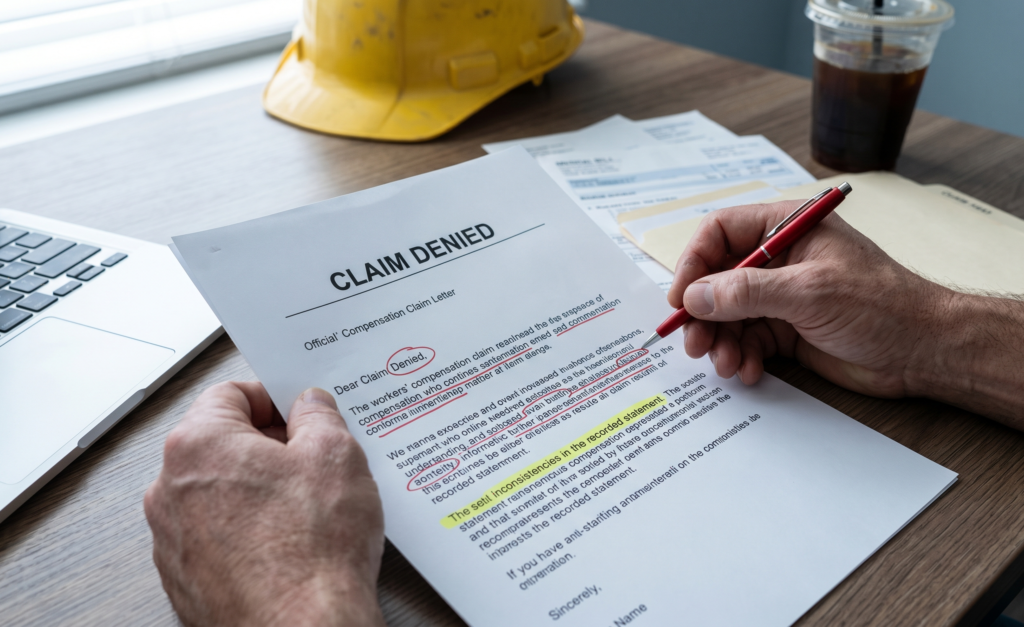
It is not. Agreeing to that recorded statement without preparation is one of the most damaging moves an injured worker can make — and most people never realize it until the denial letter shows up. The recording is not gathering your story to help you. It is gathering evidence that can be used to reduce or deny your claim.

What a Recorded Statement Actually Is
A recorded statement is an interview — usually over the phone — where an insurance company representative asks you questions about your injury, your job, your medical history, and how the accident happened. Every word is recorded and transcribed. It becomes a permanent part of your claim file.
Generally, in many states, you are not legally required to give a recorded statement to the insurance company at the early stage of a claim. Many workers assume it’s mandatory because of how the request is framed. It usually is not. Standard guidelines suggest treating any request to be recorded as a formal legal step, not a casual phone chat.
Insurer Trick: Adjusters are trained to call soon after the injury — while you’re medicated, in pain, and stressed. A foggy, exhausted answer can sound like an inconsistency later, even when you’re telling the truth.
Why It’s Such a Costly Mistake
The danger isn’t that you’ll lie. The danger is that honest, off-the-cuff answers get twisted into reasons to pay you less. Here’s how a friendly conversation becomes ammunition:
- Minimizing your pain: If you politely say “I’m doing okay,” that phrase can later be quoted to argue your injury isn’t serious.
- Guessing on the record: Saying “I think it was around 10 a.m.” when you’re unsure creates a “fact” that may clash with other records.
- Pre-existing conditions: A casual mention of an old ache can be used to claim your injury wasn’t caused by work at all.
- Describing duties loosely: Understating or overstating what you do on site can affect how your wage benefits are calculated.
- Speculating about fault: Workers’ comp is generally a no-fault system, but a stray comment like “I should’ve been more careful” can still muddy the file.
Recorded Statement: What’s Often Safe vs. What’s Risky
| Information Type | Generally Lower Risk | Often High Risk |
|---|---|---|
| Your identity | Name, job title, employer | — |
| The injury | Basic confirmation an injury occurred at work | Detailed guesses about cause, speed, or angle |
| Your condition | I’m following my doctor’s care | I feel fine,” “It’s not that bad,” pain ratings |
| Medical history | — | Off-hand mentions of old injuries or conditions |
| Timeline & facts | What you clearly remember | Anything you have to guess at |
What People Often Do Instead
Workers who protect their claims usually slow the process down before agreeing to anything recorded. Attorneys often recommend a few common-sense habits:
- Pause before agreeing. It’s generally acceptable to say you’d like to schedule the call for a later time rather than speak on the spot.
- Confirm what’s required. Standard guidelines suggest asking, in writing, whether a recorded statement is actually mandatory under your state’s rules.
- Stick to what you know. “I don’t recall exactly” is an honest, complete answer — guessing is what creates problems.
- Get help first. Attorneys often recommend speaking with a professional before any recording, not after a denial.
Deadline Warning: Protecting yourself from a recorded statement does not pause your claim deadlines. Many states require that the injury be reported to your employer within a strict window — sometimes just a few days. Missing that notice deadline can sink an otherwise strong claim.
For a full walkthrough of the claims process from injury to benefits, our complete construction injury guide breaks down each step in plain language.
State Laws Change Everything
There is no single national workers’ comp law. Rules on recorded statements, reporting deadlines, and benefit amounts vary significantly from one state to the next. What’s optional in one state may carry different consequences in another. Because of this, general information — including this article — cannot replace guidance tailored to where you live and work.
For official, neutral background on worker rights and employer safety obligations, the U.S. Occupational Safety and Health Administration is a reliable starting point: OSHA’s Workers’ Rights resource.
Know Where You Stand Before You Say a Word
Before you ever pick up that adjuster’s call, it helps to understand what your claim could actually be worth — so a lowball offer or a twisted quote can’t catch you off guard. You can find out privately, with no phone call and no pressure.
Use the free, anonymous Benefits Estimator at HardHat Rights to get a clearer picture of your potential benefits in minutes. No name, no recording, no commitment — just information that puts the power back in your hands.
Disclaimer: This website is for informational purposes only and does not constitute legal or medical advice. The content provided is not intended to be a substitute for professional medical advice, diagnosis, or treatment. Benefit estimates are approximations based on standard state formulas and do not account for your state’s specific caps or your individual circumstances. Always consult a licensed workers’ compensation attorney in your state for legal advice, and a qualified health provider regarding any medical conditions or treatment.